China’s hybrid solar inverter industry has moved from component supply toward integrated energy management. This shift makes the Hybrid Inverter Lcd Display increasingly important for installers, distributors, and homeowners.
The International Energy Agency reported that global solar photovoltaic capacity exceeded 2,000 GW in 2024. Battery storage is expanding alongside it. BloombergNEF also identified China as the world’s largest stationary energy storage market, supported by falling battery prices and strong manufacturing capacity. These trends increase demand for inverters that can coordinate solar panels, batteries, backup loads, and grid power.
An LCD display may look simple. It is not.
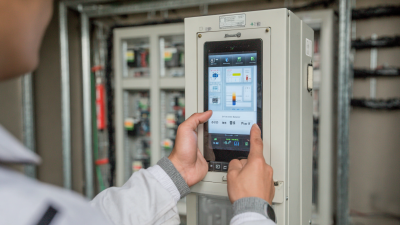
A reliable screen should show battery state, PV input, output power, fault codes, charging status, and operating mode clearly. In real installations, technicians may read the display inside a bright utility room or a dim garage. Poor viewing angles, weak contrast, or confusing symbols can delay troubleshooting.
China has many manufacturers offering hybrid inverter display solutions. Their capabilities vary widely. Some specialize in complete inverter systems, while others supply customized LCD modules, control boards, or embedded interfaces. Manufacturer comparisons should examine display brightness, operating temperature, communication protocols, enclosure protection, firmware support, and quality-control records.
Reports from Wood Mackenzie and S&P Global Commodity Insights show that inverter competition is becoming more international and technically demanding. However, market rankings can change by shipment volume, revenue, region, or product category. That detail is often overlooked.
This guide evaluates China’s leading Hybrid Inverter Lcd Display manufacturers through practical criteria, documented expertise, production experience, and after-sales reliability. It also recognizes an uncomfortable point: a polished display cannot compensate for weak electrical design, unclear certification, or inconsistent field support.
A hybrid inverter manages electricity from solar panels, batteries, and the public grid. It can store surplus power and release it when sunlight drops. Unlike a basic inverter, it coordinates several energy sources through programmed operating rules.
The LCD display makes those decisions visible. It can show battery voltage, charging current, solar output, grid status, and fault codes.
At a glance. A clear screen helps installers verify wiring and operating settings during commissioning. Homeowners can also notice unusual battery discharge or sudden power loss.
Good displays use readable icons, adjustable brightness, and simple menu paths. Clear alarms matter.
Field inspections often reveal a practical weakness: an LCD is not always perfectly accurate. Glare can hide small numbers. Refresh delays may confuse users during fast load changes. Some screens also become difficult to read in cold rooms or direct sunlight. This is why display data should be checked against measured values during testing.
When comparing Chinese manufacturers, buyers should examine screen durability, software update procedures, and technical documentation. Ask for test records covering electrical safety, electromagnetic compatibility, and applicable grid requirements. Review warranty terms and spare-part support.
A sample unit can expose menu problems early. Do not judge by appearance alone. Reliability lives in the details.
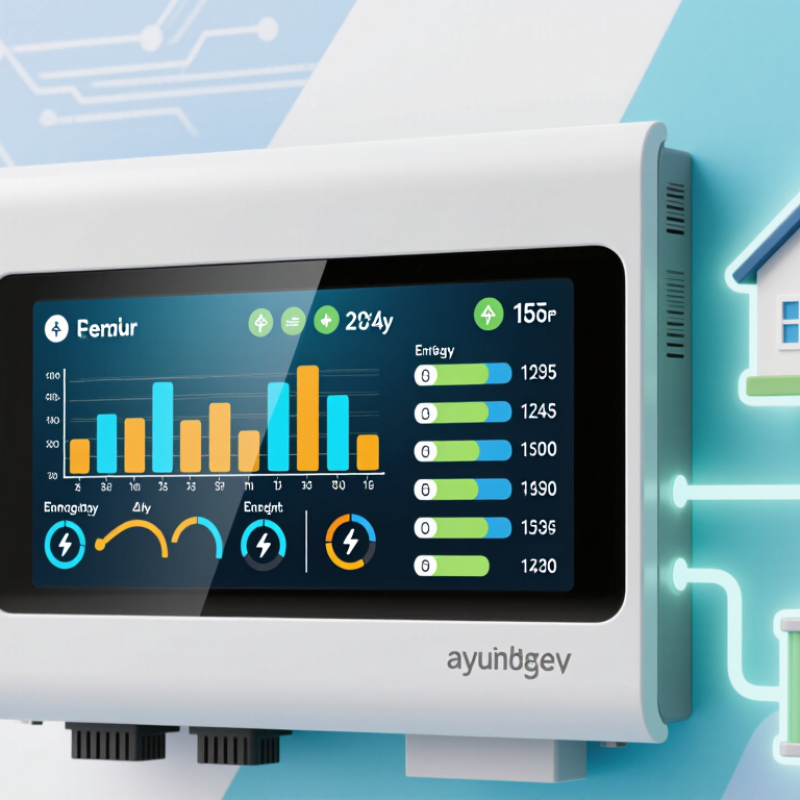
China-made hybrid inverters increasingly use LCD displays designed for quick decisions in real operating conditions. A clear 4.3-inch or 7-inch screen can show battery voltage, solar input, grid status, and load power simultaneously. Large figures matter when sunlight is strong or the installation room is dim. Backlit screens also help technicians read values during evening inspections.
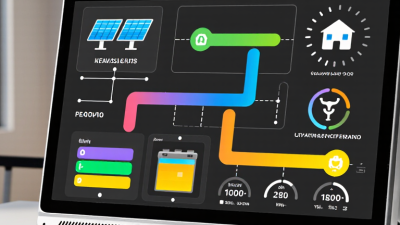
Touch control is useful, but physical buttons remain valuable with wet gloves or dusty hands. A practical interface should display energy flow with simple arrows, not crowded technical menus. Chinese manufacturers often add multilingual settings, fault codes, and adjustable brightness.
Some displays record daily generation and battery charging history. That information helps installers identify unusual losses before replacing components. I have found readable spacing more useful than decorative graphics.
Outdoor conditions expose weaknesses quickly. The LCD should tolerate temperature changes, vibration, and occasional humidity near the enclosure. A sealed front panel and durable viewing window improve long-term reliability. Yet no display is perfect. Glare can hide small numbers, and touch panels may respond slowly in cold weather. This is easy to overlook. Buyers should test the screen under direct light, inspect warning messages, and confirm whether data remains visible during communication failures. Reliable manufacturers also provide clear manuals, consistent firmware updates, and traceable quality checks for each display assembly.
China’s leading hybrid inverter manufacturers combine power electronics expertise with practical LCD display design. Many operate large production lines and support OEM or custom development for solar installers, distributors, and energy projects. Their teams usually test MPPT efficiency, thermal performance, battery compatibility, and grid response before shipment.
A useful LCD should show more than attractive numbers. It can display battery voltage, charging current, load percentage, solar input, fault codes, and operating mode in clear sections. Some manufacturers use backlit screens with physical buttons, helping technicians read data inside a dim utility room. Touchscreens look modern, but they may be less convenient when gloves or dust are involved.
Reliable factories also use burn-in testing, insulation checks, firmware verification, and sample inspections during production. Experienced engineers often review waveform quality and cooling behavior under uneven loads. Still, no manufacturing process is perfect. A loose connector, unclear alarm code, or delayed screen update can create trouble during installation. This is where supplier communication matters. Buyers should request test records, wiring diagrams, display-language options, and after-sales response procedures. Real performance depends on both the inverter and the installation conditions. A strong manufacturer explains these limits instead of promising flawless operation.
Comparing hybrid inverter LCD display manufacturers in China requires more than checking screen size. In field inspections, I look at readability under direct sunlight, viewing angle, contrast, and backlight uniformity. A clear display should show battery voltage, load power, fault codes, and charging status without confusing abbreviations. Physical buttons also matter. They should respond through work gloves and resist dust around the panel.
Efficiency claims need careful verification. The display must report energy flow accurately, not only present attractive graphics. Compare conversion efficiency, standby consumption, MPPT performance, and measurement tolerance in the technical datasheet. Ask for test conditions, because peak efficiency can hide weaker results at low loads. A larger LCD does not guarantee better performance. I have seen bright screens with slow updates. That weakness is easy to miss during a short demonstration.
Safety deserves independent evidence. Check conformity with IEC 62109 and IEC 62477-1, alongside applicable EMC testing under the IEC 61000 series. Confirm insulation, temperature rise, surge protection, and enclosure ratings through current test reports. Certification logos alone are not enough. Verify the certificate holder, model range, laboratory, and report date. One practical concern remains: touchscreen interfaces can fail with moisture or gloves. A reliable design keeps essential controls available through simple buttons, even when the display becomes unreadable.
| Comparison Dimension | Practical Benchmark | Priority | ||
|---|---|---|---|---|
| LCD Technology | Monochrome segment LCD | Usually provides basic status, fault codes, battery voltage, PV power, and operating mode information. It is generally lower-cost and easier to read in direct sunlight than a low-quality color panel. | Request a live demonstration under direct sunlight and low-light conditions. Check whether all key parameters remain readable without relying on a mobile application. | Medium |
| LCD Technology | Color TFT LCD | Common screen sizes for hybrid inverters are approximately 2.4 to 7 inches. Color interfaces can display graphs, energy-flow diagrams, alarms, and multilingual menus more clearly. | Confirm the actual diagonal size, pixel resolution, viewing angle, menu language support, and whether the display remains functional during Wi-Fi or cloud-service interruptions. | High |
| Outdoor Readability | Brightness and contrast | A practical outdoor design should provide strong contrast, anti-glare protection, and a wide operating temperature range. Brightness figures should be provided in nits or candelas per square metre; they should not be inferred from marketing terms such as “sunlight readable.” | Ask for the LCD datasheet and test photographs taken in direct sunlight. Check whether the display has an adjustable backlight or a high-contrast viewing mode. | High |
| Touchscreen Durability | Touch panel performance | Capacitive touchscreens are convenient but may be less practical with gloves or wet fingers. Physical buttons can be more dependable for basic operation in dusty or outdoor installation environments. | Test operation with work gloves, light moisture, and repeated presses. Request the rated touch-panel life and the front-panel ingress-protection rating. | High |
| Display Operating Conditions | Temperature and humidity | Many power-electronic products are specified for approximately −25°C to +60°C or −25°C to +70°C, but the LCD may have a narrower operating range than the inverter electronics. High temperature can reduce display contrast and service life. | Compare the inverter operating-temperature range with the separate LCD module specification. Check whether output power derating begins at elevated ambient temperature. | High |
| Energy Conversion Efficiency | Maximum and European efficiency | Hybrid inverter datasheets commonly state maximum efficiencies above 95%, while the exact value depends on topology, battery voltage, load level, PV voltage, and operating mode. European efficiency is more useful than peak efficiency for typical operation. | Compare maximum efficiency and weighted efficiency under the same battery voltage, PV input range, output power, and grid configuration. Prefer independent test reports over a single peak figure. | High |
| Standby Consumption | Idle and nighttime power use | Standby consumption varies by design and can increase when the LCD backlight, communication module, or battery-management interface remains active. A low standby figure should state the operating condition and connected accessories. | Measure AC and DC consumption with a calibrated power meter while the inverter is idle, operating at night, connected to a battery, and connected to communications equipment. | Medium |
| Battery Compatibility | Voltage range and communication | Low-voltage hybrid systems commonly use battery banks around 40–60 V nominal, while high-voltage systems may operate across several hundred volts. Compatibility depends on voltage limits, charge current, CAN or RS485 communication, and approved battery profiles. | Request the supported-battery list, minimum and maximum battery voltage, charge/discharge current, communication protocol, and fault-response behavior when communication is lost. | High |
| Electrical Safety | Inverter safety certification | IEC 62109-1 and IEC 62109-2 are widely used safety standards for power converters used in photovoltaic systems. For North American projects, UL 1741 may be relevant depending on the product category and installation requirements. | Check the certificate number, exact model and revision, certification body, rated input and output conditions, and whether the certificate applies to the complete inverter rather than only a component. | Critical |
| Grid-Connection Compliance | Anti-islanding and grid support | Grid-connected hybrid inverters may need to meet local interconnection rules such as EN 50549-1 in relevant European applications or IEEE 1547-related requirements in the United States. Requirements vary by country, utility, and system type. | Match the exact market destination with the applicable grid code. Confirm anti-islanding test evidence, voltage and frequency ride-through functions, reactive-power control, and utility approval where required. | Critical |
| EMC and Immunity | Electromagnetic compatibility | Relevant testing may include conducted and radiated emissions plus immunity tests. IEC 61000-6-2 is commonly associated with immunity for industrial environments, while IEC 61000-6-4 addresses emissions for industrial environments. | Request the EMC test report and verify that the tested model, hardware revision, communication accessories, and operating conditions match the supplied product. | High |
| Ingress Protection | Enclosure protection | IP ratings are defined by IEC 60529. The first digit relates to protection against solid objects and dust, while the second digit relates to water protection. An IP rating does not by itself confirm resistance to condensation, salt mist, or chemical exposure. | Check the product label and certification documentation. For outdoor installations, evaluate cable glands, display seals, ventilation paths, drainage design, and installation clearances. | Critical |
| Protection Functions | Electrical and thermal protection | A robust hybrid inverter normally includes overvoltage, undervoltage, overcurrent, short-circuit, over-temperature, ground-fault or insulation monitoring, anti-islanding, and battery protection functions, subject to the system architecture. | Review the protection list and fault-handling logic. Request test records showing safe shutdown, alarm display, event logging, automatic restart conditions, and manual reset procedures. | Critical |
| LCD Alarm Information | Fault visibility and event history | A useful interface should show a descriptive fault code, affected subsystem, time stamp, operating status, and recommended corrective action. A generic “error” message is insufficient for efficient troubleshooting. | Simulate approved test conditions such as grid loss or communication interruption. Confirm that the screen identifies the event and retains a readable history after restart. | High |
| Data Accuracy | Displayed electrical values | LCD values such as voltage, current, power, state of charge, and energy yield are monitoring values and may not have the same accuracy class as revenue-grade meters. Accuracy depends on sensors, calibration, and measurement conditions. | Compare displayed values with calibrated external meters at several load levels. Ask for stated measurement tolerances and whether values are instantaneous, averaged, or accumulated. | High |
| Serviceability | Firmware and replacement support | Firmware updates can improve display functions, communication compatibility, and protection logic, but an update process should prevent interruption or corruption. A replaceable display module can reduce downtime when the power stage remains healthy. | Confirm update methods, rollback capability, firmware authentication, local service access, spare-part availability, warranty period, and typical repair turnaround time. | High |
| Supplier Evaluation | Documentation and traceability | A reliable supplier should provide a model-specific datasheet, user manual, installation manual, conformity declarations, certification records, test reports, wiring diagrams, and serial-number traceability. | Ensure that documents identify the exact model, rated power, firmware or hardware revision, applicable standards, certification scope, and production date. Avoid relying only on catalog screenshots. | Critical |

China Top Hybrid Inverter LCD Display Manufacturers?
Before choosing a Chinese hybrid inverter manufacturer, verify performance beyond the LCD screen. A bright display can hide weak firmware or poor battery control. The IEA PVPS Trends 2024 report recorded about 456 GW of new solar capacity worldwide in 2023. That growth increases demand for stable, serviceable hybrid systems. Ask for tested efficiency curves, MPPT operating ranges, overload behavior, and battery communication records. Do not rely only on catalog figures.
Check whether the factory follows relevant IEC safety and EMC standards, including IEC 62109 and IEC 62116 where applicable. Request current test reports, traceable serial numbers, and sample-based inspection results. Review warranty terms carefully. Who pays for replacement shipping? How quickly are spare boards supplied? These details matter more than a polished sales presentation. Confirm LCD visibility under direct sunlight, menu language, alarm history, remote monitoring, and data retention. Small screens still need clear warnings.
Use an independent laboratory when possible. Compare at least two production samples, not one perfect demonstration unit. Wood Mackenzie’s global energy storage research repeatedly highlights the importance of bankability, service capability, and supply-chain reliability. A low price may become expensive after firmware failures or delayed parts. I would also test cold starts, grid interruptions, and rapid load changes. No checklist is perfect. Some buyers still overtrust certifications and forget after-sales communication, which is a costly weakness.