How to Choose the Best Portable Energy Monitor
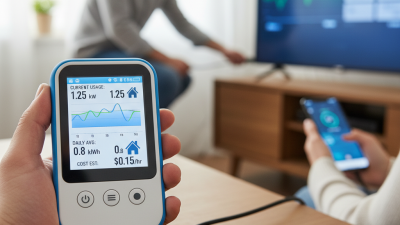
Choosing the best Portable Energy Monitor begins with a clear question: what must it measure?
A homeowner may need appliance-level readings. A field technician may need voltage, current, power factor, and accumulated kilowatt-hours. These needs are different. A bright screen alone proves little.
Energy measurement expert William Thomson, Lord Kelvin, famously said, “If you cannot measure it, you cannot improve it.” His principle still matters when comparing modern Portable Energy Monitor models. Accurate data should guide every purchase.
Look for a certified measurement range that matches your equipment. Check whether the monitor supports AC, DC, or both. Confirm its maximum current before connecting heaters, pumps, or workshop tools. A clamp sensor can measure a cable without interrupting power. That small detail can prevent unnecessary downtime.
Display quality also matters. Imagine standing beside a noisy generator, reading values under weak light. Large digits and clear symbols become practical advantages. Data logging, Bluetooth access, export functions, and overload protection may matter more than a low price.
Do not ignore battery behavior. A monitor that dies during a long inspection creates incomplete evidence. That can distort conclusions.
Still, no device is perfect. Sensor placement, wiring conditions, and user mistakes affect results. I have seen impressive dashboards hide poor measurements. This is why independent testing, calibration information, warranty coverage, and transparent specifications deserve careful attention.
The best Portable Energy Monitor is not necessarily the most expensive model. It is the one that produces dependable readings in your real working environment. Choose for accuracy, safety, usability, and honest limitations. Convenience should support judgment, not replace it.
Define Your Portable Energy Monitoring Needs
How to Choose the Best Portable Energy Monitor
Define your monitoring need before comparing specifications. IEA’s Electricity 2024 report expects global electricity demand to grow by about 4% annually through 2026. That trend makes portable measurement useful when loads, batteries, and tariffs change. Define the decision first. Do you need real-time watts, daily energy totals, power quality, or long-term logging? A refrigerator test needs stable recording over several hours. Solar charging requires suitable voltage and current ranges. Measuring a workshop tool may require a higher current limit and fast sampling.
Write down the location, load, measurement period, and expected operating range. The U.S. Energy Information Administration reported average residential electricity use of about 10,791 kilowatt-hours per customer in 2022. A household monitor therefore needs clear energy totals, simple reading, and safe installation. A camper or field technician may value battery life, compact storage, and screen visibility more. Accuracy comes first. Check stated accuracy across the loads you actually use, not only laboratory conditions. Also examine data export, overload protection, enclosure strength, and calibration information.
Professional reports provide context, but they cannot choose your device. IEA figures describe electricity systems, not your aging freezer or loose cable. I once made a checklist too broad. That was a mistake. A shorter list exposed the real requirement: logging overnight energy without a wall outlet. Look for documented compliance with applicable electrical safety standards, transparent test methods, and readable instructions. Avoid impressive specifications that omit measurement conditions. Your ideal monitor should answer one practical question clearly, even when your first assumption proves wrong.
How to Choose the Best Portable Energy Monitor
Define your portable energy monitoring needs by comparing typical operating power with short-term peak demand.
Low-power devices mainly require accurate readings at small loads, while refrigerators and cooking equipment require a monitor with sufficient peak-current capacity. Choose a model that supports the highest expected peak power and provides the sampling speed, logging duration, and portability needed for your use case.
Compare Measurement Accuracy, Sensors, and Data Ranges
Portable Energy Monitors: Compare Measurement Accuracy, Sensors, and Data Ranges
Portable energy monitors are useful when a display shows more than a single wattage number. In practical testing, accuracy matters most at low loads, where sensors may drift. A device drawing 8 watts should not appear to use 15 watts. That gap can distort monthly cost estimates. Look for stated accuracy across the full measurement range, not only at typical household loads. Independent test data is valuable, but testing conditions should be visible.
Sensor design also changes the result. Plug-through sensors measure one appliance directly and often reduce installation uncertainty. Clamp sensors can monitor circuits without disconnecting wiring, but placement and jaw alignment affect readings. Hall-effect sensors handle direct current, while current transformers commonly measure alternating current. The monitor must match the circuit type. It sounds obvious.
Data range deserves equal attention. A small monitor may miss standby power or overload during motor startup. Check the minimum detectable current, maximum voltage, sampling rate, and supported frequency. A wide range is helpful, yet broad coverage can reduce resolution. That trade-off is easy to overlook.
I prefer monitors that store time-stamped readings and show watts, voltage, current, power factor, and accumulated energy. Calibration should be documented, with a clear method for checking results against a trusted meter. Real use is messy. Cable temperature, shared circuits, and changing loads can create small errors, so repeated readings are wiser than one impressive number.
How to Choose the Best Portable Energy Monitor - Compare Measurement Accuracy, Sensors, and Data Ranges
| Monitor Category |
Typical Electrical System |
Voltage Measurement Range |
Current Sensor |
Current Range |
Typical Basic Accuracy |
Energy Data Range |
Best Use |
| Plug-in Energy Monitor |
Single-phase AC |
90–264 V AC |
Internal shunt or Hall-effect sensor |
0.01–16 A |
±1.0% of reading |
0.001–9,999 kWh |
Household appliances and office equipment |
| Socket Energy Meter with Display |
Single-phase AC |
100–250 V AC |
Built-in resistive shunt |
0.01–16 A |
±1.0–2.0% of reading |
0.001–9,999 kWh |
Low-cost energy checks and standby-power testing |
| Clamp-Based Power Meter |
Single-phase AC; non-invasive installation |
0–600 V AC |
Split-core current transformer or flexible Rogowski coil |
0.1–600 A, depending on probe |
±1.0–2.0% of reading |
0.01–99,999 kWh |
Distribution panels, motors, and circuits where disconnection is undesirable |
| Handheld Power Quality Meter |
Single-phase or split-phase AC |
0–600 V RMS |
Interchangeable CT clamp or flexible coil |
1–3,000 A, sensor-dependent |
±0.5–1.0% of reading |
0.1–999,999 kWh |
Field diagnostics, load studies, and troubleshooting |
| Portable Three-Phase Analyzer |
Three-phase, three-wire or four-wire AC |
0–1,000 V AC line-to-line |
Three or four CT clamps; Rogowski coils may be supported |
1–6,000 A, sensor-dependent |
±0.5–1.0% of reading |
0.1–999,999 kWh |
Industrial systems, balancing loads, and energy audits |
| DC Battery Energy Monitor |
12–48 V DC battery systems |
0–60 V DC |
Precision shunt or Hall-effect transducer |
0.1–500 A |
±0.5–1.0% of reading |
0.001–99,999 Ah or Wh |
Portable power stations, solar storage, and vehicle batteries |
| USB-C Power Meter |
Low-voltage DC USB power delivery |
0–50 V DC |
Integrated current-sense resistor |
0–6 A |
±0.5–1.0% of reading |
0.001–999.999 Wh |
Chargers, laptops, phones, and USB-C accessories |
Selection note: Accuracy is normally specified at a defined temperature, frequency, power factor, and percentage of the sensor range. Choose a sensor whose normal operating current falls near the middle of its range, and verify whether the stated accuracy includes the sensor, meter, and installation effects.
Evaluate Portability, Power Supply, and Device Durability
A portable energy monitor should travel easily before it measures anything.
Choose a compact unit that fits beside a charger, not one that needs its own case. The U.S. Energy Information Administration reported that residential customers averaged about 899 kilowatt-hours monthly in 2022. That figure makes standby losses worth investigating. A clear display, one-handed controls, and readable numbers in dim rooms matter more than decorative features.
Power supply needs careful checking.
A monitor powered by USB-C can use a laptop charger, vehicle adapter, or power bank. Battery operation is useful during inspections, but confirm runtime at maximum brightness. Some devices lose accuracy when their battery is nearly empty. Look for a low-battery warning and stable external power. The International Energy Agency’s Electricity 2024 report projected roughly 4% global electricity-demand growth in 2024 and 2025. Small measurement errors can therefore distort repeated household or workshop comparisons.
Durability is less visible, but more important.
Check the enclosure, cable strain relief, operating-temperature range, and published safety testing. IEC 61010-1 is a useful reference for electrical measurement equipment, while IEC 60529 defines IP protection ratings. An IP rating helps, but it does not guarantee drop resistance. I would prefer documented impact testing and a replaceable cable. Reality is untidy. A sealed monitor may survive dust, yet fail after one hard fall. Test the buttons, inspect the connector, and question specifications that provide no testing method.
Select Features That Fit Your Budget and Energy Goals
How to Choose the Best Portable Energy Monitor
Select features that fit your budget and energy goals. Start with the question you need answered. Do you want to find standby power, compare appliances, or track a monthly electricity pattern?
For simple appliance checks, choose a monitor that displays watts, voltage, current, and accumulated kilowatt-hours. A clear screen may matter more than wireless functions. Look for adjustable electricity rates if you want realistic cost estimates. Accuracy specifications are important, especially for low-power devices such as chargers and routers. Safety certification, overload protection, and strong casing should remain within your budget.
For detailed energy goals, consider data logging, time-stamped readings, and export options. These features help reveal a refrigerator’s cycling pattern or a heater’s heavy evening demand. A portable unit should have a secure plug and a readable display in dim rooms. I once compared two readings without checking their measurement range. The difference looked meaningful, but it came from unsuitable settings. Small errors can change decisions.
Set a spending limit before choosing advanced features. A cheaper monitor may be enough for one appliance, while long-term tracking may justify extra storage. Avoid paying for an app you will rarely open. Check whether the device records consistently during brief outages. Read independent test results, not only product claims. If measurements seem unusual, repeat the test at another time and compare the appliance’s rated power. Reliable habits matter as much as sophisticated hardware.