Choosing a China-based supplier for a Full Function Lcd Display takes more than comparing unit prices. Buyers should examine display performance, touch response, interface options, and fit with the intended device. A bright showroom sample can look impressive, but it may not reflect performance under different lighting or during extended use. Details matter.
A reliable evaluation starts with clear technical requirements. Share the screen size, resolution, viewing angle, operating temperature, connector type, and expected production volume. Ask suppliers for current datasheets and sample units, then test them in conditions close to the final product. Check color consistency, response time, cable placement, and whether the display integrates with your hardware. Small mismatches can cause costly redesigns.
Supplier capability matters, too. Review quality-control procedures, communication practices, sample lead times, and how engineering changes are documented. Ask how defects are handled and whether production batches are inspected against agreed specifications. Certifications and test reports can support confidence, but verify that they apply to the exact model being offered. Not always.
There is no single “best” supplier for every project. A vendor suited to a low-volume prototype may not fit large-scale production, and the lowest quote may leave important support unclear. Compare evidence, request written specifications, and leave time for independent testing. Even with careful checks, some trade-offs remain. The right choice is the supplier whose documented capabilities match your application, budget, and required reliability.
What Defines a Full-Function LCD Display Supplier?
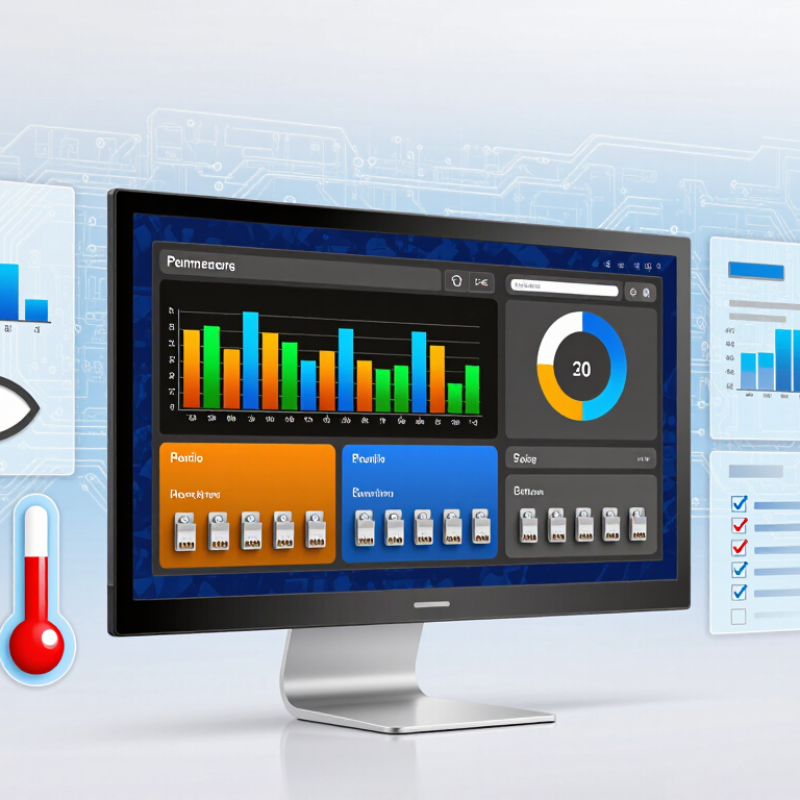
A full-function supplier does more than ship a panel. It helps match the display to its actual use: a kiosk in bright sunlight, a handheld meter with gloves, or equipment exposed to vibration. That means discussing brightness, viewing angle, touch method, interfaces, operating temperature, and mechanical fit before production. Ask for sample units and test records, not just a specification sheet. Real conditions are messier.
Engineering support should continue after the first sample. A capable supplier can explain how it checks color consistency, backlight performance, touch response, and defects across production batches. It should also provide clear component traceability and realistic lead times. No checklist catches every field failure. I would ask how the supplier handles a dim corner or intermittent touch response, and whether it can investigate the cause rather than simply replace the module.
Lifecycle planning matters, too. The Global E-waste Monitor 2024, published by UNITAR and the International Telecommunication Union, reports that 62 million tonnes of electronic waste were generated worldwide in 2022; only 22.3% was documented as formally collected and recycled. It projects 82 million tonnes by 2030. These figures are not LCD-specific, but they make repairability and stable replacement options practical sourcing questions. Ask whether the display can be serviced, whether key components will remain available, and what happens when a specification changes. A detailed answer beats a confident promise.
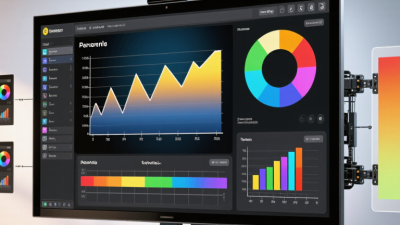
A full-function LCD module combines a liquid-crystal cell, polarizers, color filters, and a backlight. The pixels do not emit light themselves. Backlight choice, diffuser design, and optical bonding shape brightness, contrast, and readability. IPS, VA, and TN panels also differ in viewing angles and response behavior. Small details matter. A supplier should state measured luminance, uniformity, color gamut, and operating temperature, rather than rely on vague “high-brightness” claims. Touch layers and cover glass can improve usability, but may add reflections or reduce transmission. That trade-off deserves testing on the actual device.
Interfaces such as LVDS, eDP, or MIPI are not interchangeable; confirm timing, connector pinout, and host compatibility early. Ask for sample test records and lifecycle information, too. The UNITAR and ITU Global E-waste Monitor 2024 reports 62 million tonnes of e-waste generated worldwide in 2022, with 22.3% documented as formally collected and recycled. That figure covers all electronics, not LCDs alone. Still, it supports considering replaceable backlights, accessible connectors, and repairable module construction. One common mistake is choosing by resolution alone. A sharp panel can disappoint when sunlight washes out its image, or a cable mismatch prevents startup.
| Evaluation Dimension | Technology or Capability | Typical Characteristics | Selection Considerations |
|---|---|---|---|
| LCD panel type | TFT LCD | Uses thin-film transistors to control individual pixels; requires a backlight to produce a visible image. | Confirm resolution, active area, brightness, viewing direction, and operating conditions for the intended device. |
| Panel mode | IPS / in-plane switching | Generally provides wider viewing angles and more consistent color appearance across viewing positions than basic TN panels. | Check the panel’s specified viewing-angle, contrast, and response-time values; performance varies by model. |
| Panel mode | TN / twisted nematic | A mature LCD mode that can support fast pixel transitions and economical designs; viewing-angle and color performance depend on the panel. | Consider for cost-sensitive or speed-focused designs where viewing-angle requirements are suitable. |
| Panel mode | VA / vertical alignment | Often offers higher native contrast than many TN panels; viewing-angle behavior and response characteristics vary by implementation. | Compare contrast, viewing angle, and motion performance in the relevant datasheet. |
| Display format | Monochrome, character, graphic, or color TFT | Options range from simple text and icons to full-color graphical interfaces, with different resolutions and controller requirements. | Match display format and pixel resolution to content, available space, and system resources. |
| Touch capability | Projected capacitive touch | Detects touch through changes in capacitance; supports multi-touch when the controller and design provide it. | Verify cover-glass thickness, touch-controller interface, gesture needs, and operation with gloves or moisture if required. |
| Touch capability | Resistive touch | Registers input through pressure on layered surfaces and can be operated with a stylus or other suitable pointer. | Assess expected touch method, durability, optical performance, and the controller connection. |
| Host interface | SPI, parallel RGB, LVDS, or MIPI DSI | These interfaces are used in different display designs; bandwidth, pin count, signal requirements, and host support differ. | Confirm interface version, timing, voltage levels, connector pinout, and compatibility with the host processor. |
| Backlight and readability | LED backlight, brightness options, and optical treatments | LCD backlights commonly use LEDs; anti-glare, anti-reflective, and optical-bonding options can affect outdoor readability and reflections. | Evaluate measured luminance, ambient-light conditions, power use, thermal limits, and cover-window design together. |
| Mechanical integration | Custom FPC, connector, bezel, and cover glass | Mechanical and electrical details can be tailored to a product design, subject to engineering and production constraints. | Request dimensioned drawings, connector details, mounting information, and sample validation before design approval. |
| Environmental suitability | Temperature, humidity, vibration, and ingress requirements | Limits depend on the panel, backlight, touch assembly, and enclosure; they should be stated in component specifications and validated in the finished product. | Specify the required test conditions and review supporting datasheets or qualification reports. |
| Supplier evaluation | Engineering support, sample testing, quality process, and lifecycle planning | A suitable supplier should be able to provide relevant technical documentation and explain its validation, change-control, and production processes. | Compare documented specifications, sample results, support scope, lead-time assumptions, and end-of-life notification practices. |
Note: Characteristics are general technology-level guidance. Actual performance, availability, and environmental ratings are model-specific and should be confirmed against the relevant datasheet and test results.
A capable LCD supplier should turn a product drawing into a tested display assembly. Custom options may include screen size, brightness, viewing angle, touch input, cover glass, and cable placement. Small details matter. A connector shifted by a few millimeters can interfere with a housing or complicate assembly. Grand View Research’s LCD Display Market report forecasts a 4.3% compound annual growth rate from 2024 to 2030. That broad market forecast signals ongoing demand, but it cannot predict whether a custom design will succeed.
Integration needs to be checked early. Ask how the supplier validates the LCD panel, touch sensor, controller, firmware, and FPC as one system. Request samples for testing under your real operating conditions, including temperature changes, long operating hours, and the expected ambient light. For example, test whether a 5-inch panel remains readable behind the final cover glass, not just on a lab bench. IEA’s Electricity 2024 report says global electricity demand rose 2.2% in 2023. For equipment makers, that makes backlight power and brightness tuning practical design considerations.
Manufacturing services should cover more than assembly. Review tooling ownership, inspection criteria, traceability, and the supplier’s process for handling design changes. Ask for a pilot run before committing to volume. One caveat: adding touch, optical bonding, or a custom interface can raise cost and extend lead time. It may not be worth it for every product. Compare the finished assembly’s performance with its added complexity.
A reliable full-function LCD supplier should prove consistency, not just show a bright sample. Check touch response, viewing angles, brightness uniformity, interface stability, and performance across the stated temperature range. Ask for inspection records from several production lots, plus clear limits for dead pixels and cosmetic defects. Paperwork is not proof. Compare the supplier’s test results with your own incoming checks, using the same patterns and measurement conditions. A spotless sample can still hide weak process control.
Assess reliability through traceability and response time, too. Can the supplier link a panel’s serial number to its materials, production date, and test record? Request evidence of corrective actions for past failures, and test pilot units before approving volume orders. The World Bank’s 2023 Logistics Performance Index compares 139 economies across customs, infrastructure, tracking, and other logistics measures; it offers useful context for delivery risk, but does not certify factory quality. Track your own on-time delivery, defect, and warranty-return rates. One limitation: supplier-reported figures can look reassuring unless you verify samples independently.
Selecting an LCD supplier in China starts with a clear specification, not a low quotation.
A full-function LCD may combine a display panel, touch layer, driver board, and custom interface. Before comparing suppliers, define screen size, resolution, brightness, viewing angle, operating temperature, and connector type. Ask for datasheets and confirm that the listed component numbers match the sample. Check whether the stated brightness remains readable under your actual lighting.
A sample viewed beside a sunny window can reveal glare that a catalog photo hides. Don’t skip this.
A capable supplier should explain design limits and provide a realistic sample and production schedule. Request an interface drawing, then test the display with your own board and cables. Confirm how revisions, defect reports, and replacement parts are handled. For industrial or outdoor use, ask for documented temperature and vibration test conditions rather than accepting vague assurances. Factory audits can help, but they are only one part of the evaluation.
Still, paperwork is not proof that every production unit will match the sample.
A rushed sample may also conceal longer lead times or weaker quality checks. The lowest quote can become costly if the viewing angle, touch response, or connector differs from your requirements.