2026 Best Full Size LCD Display for Global Buyers?
Choosing the 2026 best Full Size Lcd Display requires more than comparing screen dimensions or promotional brightness figures. Global buyers must examine viewing distance, operating temperature, touch performance, power consumption, and long-term availability. A large panel may look impressive in a showroom, yet perform poorly beside a sunny window or inside a warm control room.
Dr. Raymond M. Soneira, founder of DisplayMate Technologies, has stated, “The display is the most important component of a mobile device.” His point remains relevant for larger professional screens. Image consistency, readable text, accurate color, and dependable backlighting directly influence daily productivity. Buyers should request measured data, not rely only on catalog language. Check luminance in real conditions. Test dark scenes, fast movement, and wide-angle viewing. Small details matter.
This guide evaluates Full Size Lcd Display options for offices, transportation systems, retail spaces, classrooms, and industrial applications. It considers panel size, resolution, refresh behavior, connectivity, warranty support, installation requirements, and regional compliance. Procurement teams should also verify replacement parts and manufacturer history. Specifications can change between production batches. That deserves attention.
No single display suits every market. A bright panel may consume more energy. A slim design may sacrifice serviceability. A lower-cost model may create higher ownership costs later. These trade-offs are easy to overlook. Our comparison aims to make them visible, using practical criteria and cautious interpretation. Still, performance depends on installation. Even the best display can disappoint when mounting, calibration, or ventilation is poorly planned.
What Defines a Full-Size LCD Display in 2026
2026 Best Full Size LCD Display for Global Buyers?
What Defines a Full-Size LCD Display in 2026
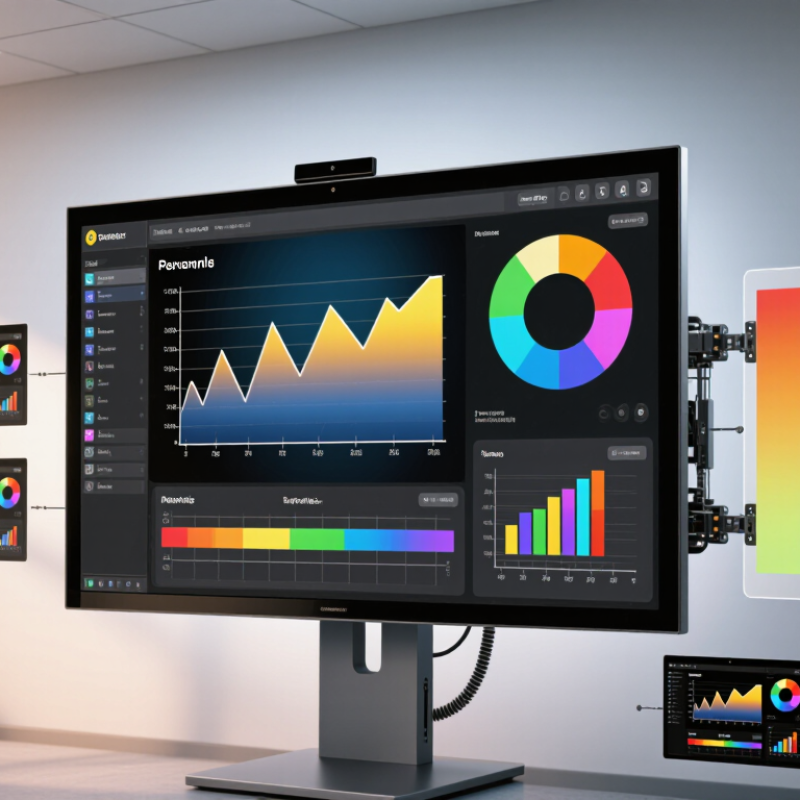
“Full-size” no longer has one universal meaning. In 2026, it usually describes a display with a practical viewing area for its intended environment, not simply the largest available panel. A desktop model may use a 23.8-inch or 27-inch diagonal, while an industrial unit may be measured by active-area dimensions. The phrase can still confuse buyers.
Look beyond the diagonal measurement. Check the active display area, bezel width, aspect ratio, resolution, and mounting depth. A 27-inch screen with thick bezels may occupy more space than expected. A narrow bezel can improve multi-screen layouts. For office work, 1920×1080 remains functional, but higher resolutions provide sharper text on larger panels. Brightness, contrast stability, and viewing angles matter in rooms with windows or changing light.
Real conditions expose weak specifications. Test readability at different angles. Check whether the screen remains clear after several hours of use. For global purchasing, confirm input interfaces, power requirements, language support, warranty terms, and regional compliance documents. Touch capability may be useful, but it can add reflections and maintenance concerns. I would not treat a manufacturer’s “full-size” claim as a technical standard. Request an outline drawing and measured active area instead. Small details decide fit.
Core Specifications That Determine Display Quality and Performance
2026 Best Full Size LCD Display for Global Buyers?
Core Specifications That Determine Display Quality and Performance
Choosing a full size LCD display starts with the panel, not the product label. Resolution affects text sharpness, image detail, and viewing comfort. For large screens, higher pixel density usually keeps fine lines cleaner. Brightness matters in rooms with windows, but excessive brightness can cause eye fatigue. A practical range should match the installation environment.
Contrast performance controls how clearly dark and bright areas appear. Static contrast is more useful than inflated marketing figures. Check grayscale transitions with shadow details and skin tones. Color coverage is important for design, video, and professional review. Factory calibration helps, although every panel can vary slightly.
Refresh rate and response time influence motion quality. Fast scenes may show blur when response measurements use different testing methods. Viewing angles also deserve a real inspection. Colors should remain stable when people stand beside the screen. Connectivity must support the intended devices, including current video inputs, audio output, and control interfaces.
Heat management affects long-term reliability. A display running eight hours daily needs stable ventilation and consistent power. Check operating temperature, power consumption, and available protection standards for the target market. I have seen buyers focus on resolution while ignoring glare and cable distance. That mistake is expensive. Specifications can look perfect on paper, yet a bright room may expose weaknesses immediately. Requesting test images and measured data is safer than trusting one impressive number.
2026 Best Full Size LCD Display for Global Buyers? - Core Specifications That Determine Display Quality and Performance
| Display Size |
Recommended Resolution |
Approx. Pixel Pitch |
Typical Brightness |
Native Contrast Ratio |
Refresh Rate |
Color Performance |
Viewing Angle |
Typical On-Mode Power |
Expected Service Life |
Best-Fit Applications |
| 43 inches |
3840 × 2160
UHD 4K |
Approx. 0.25 mm |
350–500 cd/m² |
1,200:1–4,000:1 |
60–120 Hz |
sRGB coverage typically 95–100% |
Up to 178° horizontal/vertical |
70–130 W |
30,000–50,000 hours |
Meeting rooms, control desks, retail signage, compact digital signage |
| 55 inches |
3840 × 2160
UHD 4K |
Approx. 0.32 mm |
350–700 cd/m² |
1,200:1–5,000:1 |
60–120 Hz |
sRGB coverage typically 95–100%; DCI-P3 commonly 72–90% |
Up to 178° horizontal/vertical |
90–180 W |
30,000–60,000 hours |
Conference rooms, classrooms, hospitality, retail and corporate signage |
| 65 inches |
3840 × 2160
UHD 4K |
Approx. 0.37 mm |
400–700 cd/m² |
1,200:1–5,000:1 |
60–120 Hz |
sRGB coverage typically 95–100%; wide-gamut models available |
Up to 178° horizontal/vertical |
120–240 W |
30,000–60,000 hours |
Large meeting rooms, education, command centers, museums and premium signage |
| 75 inches |
3840 × 2160
UHD 4K |
Approx. 0.43 mm |
450–800 cd/m² |
1,200:1–5,000:1 |
60–120 Hz |
sRGB coverage typically 95–100%; DCI-P3 commonly 72–95% |
Up to 178° horizontal/vertical |
160–320 W |
30,000–60,000 hours |
Lecture halls, boardrooms, transportation areas and high-visibility signage |
| 86 inches |
3840 × 2160
UHD 4K |
Approx. 0.49 mm |
450–800 cd/m² |
1,200:1–5,000:1 |
60–120 Hz |
sRGB coverage typically 95–100%; wide-gamut options available |
Up to 178° horizontal/vertical |
200–400 W |
30,000–60,000 hours |
Auditoriums, training rooms, public information displays and large-format collaboration |
| 98 inches |
3840 × 2160
UHD 4K |
Approx. 0.56 mm |
500–1,000 cd/m² |
1,200:1–5,000:1 |
60–120 Hz |
sRGB coverage typically 95–100%; enhanced color models available |
Up to 178° horizontal/vertical |
280–550 W |
30,000–60,000 hours |
Large venues, transportation hubs, command centers and high-impact commercial signage |
Buyer evaluation note: Actual performance varies with panel technology, backlight design, thermal management, firmware and operating mode. For global deployment, also verify input voltage range, local power-plug compatibility, operating temperature, humidity rating, warranty coverage, spare-parts availability, energy certification and compliance with applicable regional safety and electromagnetic-compatibility requirements.
Key Regional Standards for Global Display Buyers
2026 Best Full Size LCD Display for Global Buyers?
Key Regional Standards for Global Display Buyers
A full-size LCD display is not globally ready because its screen looks impressive. Buyers must verify electrical, safety, electromagnetic, and environmental requirements for each destination. Input voltage and frequency matter. A display designed for 120 volts may need different testing for 230-volt markets. Plug formats, grounding methods, and standby power rules also vary.
IEC 62368-1 is widely used for audio, video, and information technology equipment. However, local approval remains important. The United States may require FCC electromagnetic compliance, while Canada uses its own interference standards. European shipments commonly involve CE requirements, RoHS limits, and waste-handling obligations. China, Australia, New Zealand, Korea, and India may require additional national certifications. Requirements can change with screen size, power supply, wireless functions, and built-in components.
Check the complete product configuration.
A reliable purchasing process requests test reports, declarations, user manuals, labels, and importer responsibilities before production. Confirm that the model number matches every document. Small differences in adapters or firmware can affect approval status. Accessibility also deserves attention, including readable menus, clear controls, and suitable mounting guidance. Energy performance should be checked under realistic operating conditions, not only laboratory claims. No checklist is perfect. I have seen buyers approve a panel, then discover that its replacement power adapter needed separate regional review. Build compliance checks into sampling, shipment inspection, and after-sales planning. That extra step may feel excessive, but regional returns cost far more.
2026 Best Full Size LCD Display for Global Buyers? - Key Regional Standards for Global Display Buyers
The chart compares nominal single-phase mains voltage across major buying regions. Full-size LCD displays should be configured for the destination market because voltage, frequency, plug type, and mandatory conformity requirements differ by region. Actual operating ranges may vary by national regulations and local grid conditions.
Reference framework: IEC 60038 nominal supply voltages. Buyers should also verify applicable regional safety, electromagnetic compatibility, energy-efficiency, labeling, and plug requirements before shipment.
How to Compare Full-Size LCD Displays Across Use Cases
2026 Best Full Size LCD Display for Global Buyers?
How to Compare Full-Size LCD Displays Across Use Cases
“Full-size” needs a procurement definition. For many buyers, it means a 27–32-inch LCD with 4K resolution, while control rooms may require larger panels or tiled walls. Compare pixel density, viewing distance, brightness, refresh rate, response time, and viewing angle together. A 32-inch 4K screen provides roughly 138 pixels per inch, making spreadsheets and detailed dashboards easier to read. Brightness changes everything. Office work may need 250–350 nits, while sunlit signage often requires far more.
Use cases should control the specification, not attractive packaging. Graphic work needs stable color, wide-gamut coverage, and calibration support. Trading desks and monitoring rooms prioritize readability, low latency, uniformity, and continuous operation. Public information screens need strong brightness, thermal control, and dust resistance. The International Energy Agency’s 2024 Energy Efficiency report repeatedly identifies efficient equipment as important for lowering operational demand, so measure annual power use rather than wattage alone. A small efficiency difference becomes expensive across hundreds of displays.
I have made this mistake before.
I compared image quality first and ignored service access. That approach can fail. The 2024 Global E-waste Monitor reported 62 million tonnes of electronic waste in 2022, with only 22.3% formally collected and recycled. Buyers should therefore examine panel replacement, repair documentation, warranty coverage, spare-part availability, and end-of-life procedures. Use a weighted scorecard, and test samples under actual lighting. A display that looks excellent in a showroom may expose reflections, uneven backlighting, or weak text clarity after installation. Specification sheets are useful, but field testing remains imperfect and necessary.
A Practical Framework for Choosing the Best Global Model
Choosing the best full-size LCD display for global buyers requires more than chasing resolution.
A 27-to-32-inch panel usually offers practical workspace without overwhelming a standard desk. For office work, prioritize sharp text, adjustable height, low-reflection coating, and stable viewing angles.
A 4K panel can improve spreadsheets and design details, but scaling support matters across operating systems. My first shortlist often favored brightness. I later found uniformity mattered more in long daily sessions.
Market evidence also supports a careful purchasing framework.
IDC’s Worldwide Quarterly PC Monitor Tracker reported improving monitor demand during 2024, reflecting replacement cycles and hybrid-work requirements. That growth does not make every large display a smart choice.
Check the input range, plug configuration, language options, warranty coverage, and repair access before ordering. Confirm compatibility with local electrical standards and workplace requirements.
IEC 62368-1 compliance is a useful safety reference, not a substitute for regional certification.
Energy and disposal deserve equal attention.
The Global E-waste Monitor 2024 recorded 62 million tonnes of electronic waste generated in 2022, while only 22.3% was formally collected and recycled.
Choose a display with efficient standby behavior, replaceable cables, durable controls, and accessible service information. A higher refresh rate may benefit gaming or motion-heavy work, but it can add cost and energy use.
A practical test is simple: read small text, view a gray screen, inspect ports, and check the stand at eye level.
Specifications can look perfect. Real desks are less forgiving.