What is USART UART Serial Port LCD Module and Its Uses?
In the world of embedded systems, the USART/UART Serial Port LCD Module stands out as an essential component. This module facilitates communication between microcontrollers and LCD displays. Its versatility makes it a popular choice among engineers and hobbyists alike. With its ease of use, the USART/UART Serial Port interface allows for efficient data transfers. It enables real-time data representation, which is crucial in many applications.
Understanding the functionality of the USART/UART Serial Port LCD Module is key. It not only simplifies the design process but also enhances project functionality. Users can send commands and data with minimal overhead. This communication method is both reliable and efficient. However, configuring the module can sometimes be challenging. Users may encounter issues with compatibility or timing. Recognizing these nuances is vital for successful implementation.
Overall, the USART/UART Serial Port LCD Module proves to be a powerful tool in digital communication. As applications become more complex, mastering this technology will become even more important. The potential for innovation is vast, yet it requires careful handling and a solid understanding of the underlying principles.
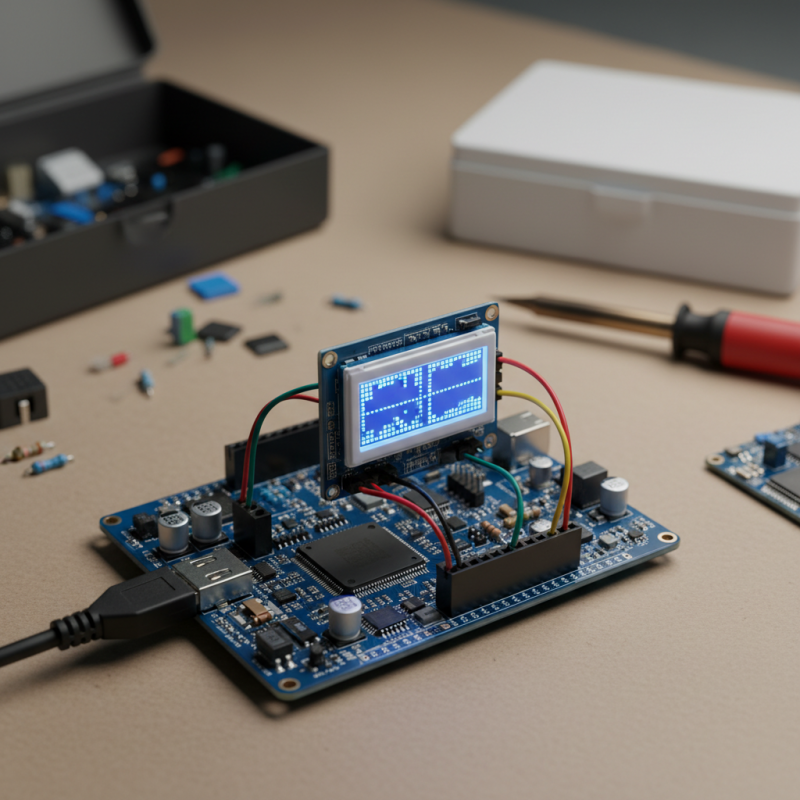
What is a USART UART Serial Port and Its Differences?
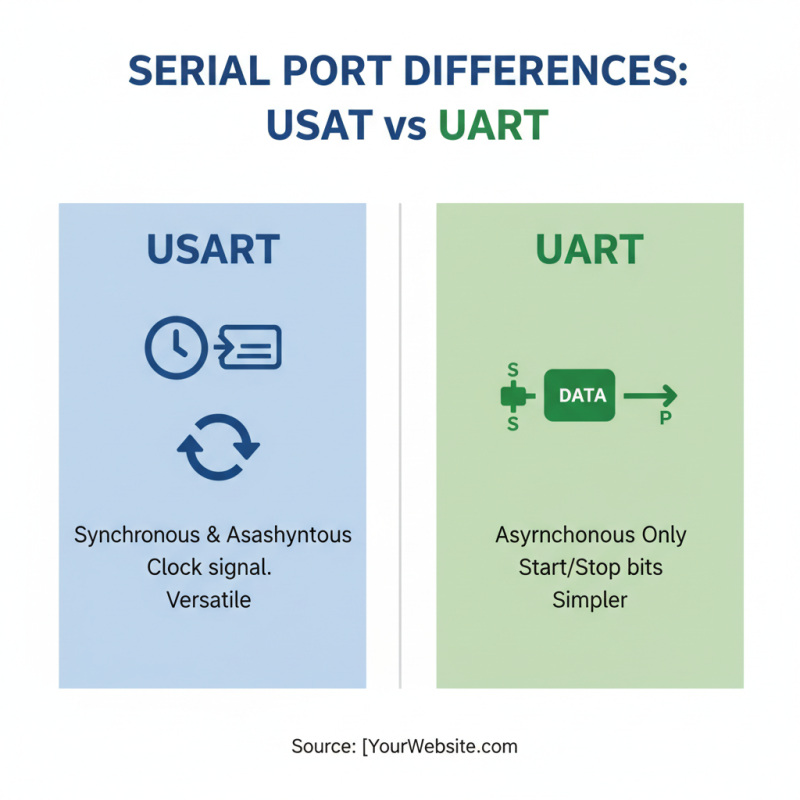
USART and UART are two types of serial communication protocols. Although they are often used interchangeably, they have key differences. USART stands for Universal Synchronous/Asynchronous Receiver/Transmitter, while UART means Universal Asynchronous Receiver/Transmitter. The primary distinction lies in synchronization. USART can operate in both synchronous and asynchronous modes, giving it more versatility. Conversely, UART functions solely in asynchronous mode, relying on start and stop bits to manage data transmission.
In practical applications, the choice between USART and UART can impact the performance of your system. For instance, USART can handle more complex communication requirements, making it suitable for high-speed data transfers. This is particularly useful in applications like GPS modules or advanced sensors. On the other hand, UART is simpler and often used in basic applications such as connecting microcontrollers with peripheral devices. This simplicity can sometimes lead to delays in data transmission, particularly in noisy environments.
Both USART and UART play significant roles in modern electronics. Understanding their strengths and weaknesses can guide your design choices. It's important to reflect on the specific needs of your project. Remember, the right protocol can enhance system reliability and efficiency, but the wrong choice might lead to unexpected failures or communication errors.
Understanding the Basics of LCD Modules and Their Functionality
LCD modules have become integral to modern electronics, serving as the primary interface for user interaction. These modules convert digital signals into readable text and graphics. According to the latest studies, the global LCD market is expected to reach $133 billion by 2026, reflecting their widespread adoption in various devices. The technology behind these modules allows for vibrant displays, enhancing user experience across many applications.
Understanding how LCD modules function is crucial. They utilize liquid crystals to modulate light, creating images based on electrical input. Each pixel comprises sub-pixels that can adjust brightness independently. However, the complexity of design can introduce challenges, such as pixel response time, which can affect display clarity. Reports indicate that response time issues can lead to ghosting effects in fast-moving images, which industries like gaming and video production need to mitigate.
Moreover, with the growing trend towards portable devices, energy consumption becomes a key consideration. Power-efficient LCD designs are critical for longer battery life. Inadequate power management can lead to rapid energy depletion. Continuous enhancement in materials and technology aims to improve efficiency while maintaining display quality. This field still faces opportunities for innovation, particularly in creating more durable and responsive displays.
What is USART UART Serial Port LCD Module and Its Uses?
| Dimension |
Description |
| USART |
Universal Synchronous/Asynchronous Receiver-Transmitter, a hardware communication protocol for serial communication. |
| UART |
Universal Asynchronous Receiver-Transmitter, a hardware device that enables asynchronous serial communication between devices. |
| Serial Port |
A communication interface that uses serial communication to send data one bit at a time over a single channel. |
| LCD Module |
Liquid Crystal Display module used for displaying information and visual representations, often used in embedded systems. |
| Functionality |
LCD modules receive data from a microcontroller via USART/UART and convert it to visual text/image on the display. |
| Common Uses |
Used in projects like Arduino interfaces, electronic gadgets, and communication systems for displaying messages and system information. |
How USART UART Affects Data Transmission Rates and Protocols
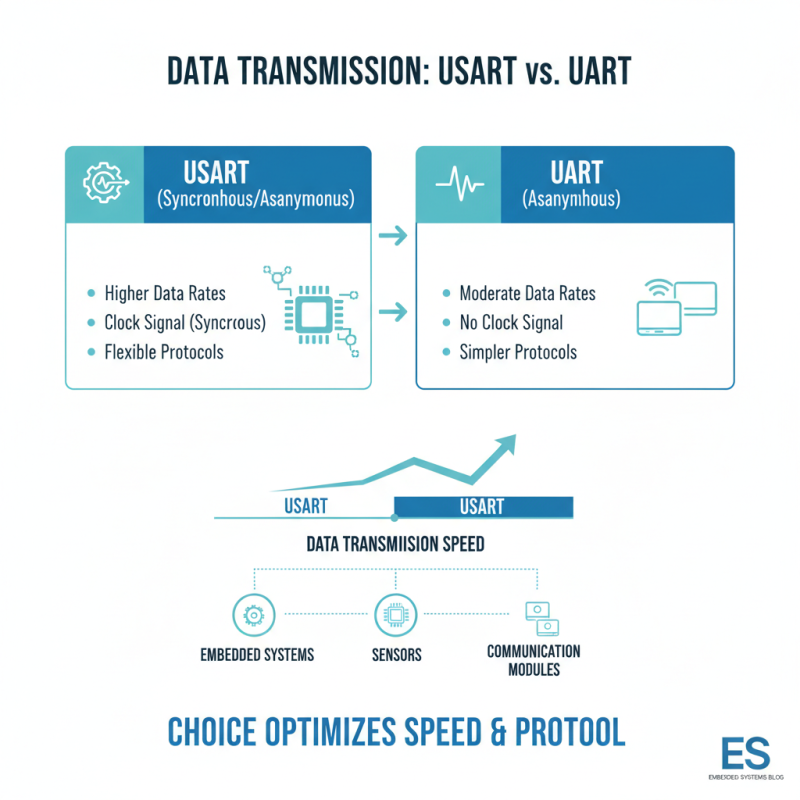
USART (Universal Synchronous Asynchronous Receiver Transmitter) and UART (Universal Asynchronous Receiver Transmitter) are essential for data communication. They significantly influence data transmission rates and protocols in embedded systems. According to industry reports, USART can achieve higher data rates than UART because it can operate in both synchronous and asynchronous modes. This flexibility allows developers to optimize communication speed based on the system requirements.
Data rates are crucial for applications like real-time monitoring or control systems. Typical baud rates for UART range from 300 bps to 115200 bps. However, USART can go beyond that, reaching rates of 1 Mbps or more, depending on the clock frequency. This increased capability allows for more robust and faster data transfer, which is essential for complex tasks like sensor data acquisition.
Error handling is another consideration. In asynchronous communication, UART does not provide inherent error detection. Conversely, USART can utilize synchronous transfer methods, which include error-checking mechanisms. This feature can lead to more reliable communication in critical applications. Yet, developers must carefully choose the right configuration, as improper settings can lead to data corruption.
Common Applications of USART UART in Embedded Systems
USART (Universal Synchronous/Asynchronous Receiver-Transmitter) and UART (Universal Asynchronous Receiver-Transmitter) are integral components in embedded systems, especially for serial communication. Their common applications are vast and significantly enhance system performance. These interfaces enable microcontrollers to transmit and receive data with minimal complexity. They are cost-effective and relatively easy to implement.
One prominent application is in temperature sensors. These devices often communicate with microcontrollers through USART or UART. Data is transmitted as serial bits, offering real-time updates. This allows monitoring systems to respond quickly to changes. Another example is in GPS modules. They send location data back to the microcontroller for navigation applications. These interactions are crucial for automotive and drone technologies.
However, there are challenges. Signal interference can occur, affecting data integrity. Choosing the right baud rate is essential for reliable communication. Additionally, while UART is simpler, it lacks synchronization features. In contrast, USART can be complex but offers greater reliability. Designers must constantly evaluate these trade-offs for optimal performance.
Common Applications of USART and UART in Embedded Systems
Integrating LCD Modules with USART UART for Enhanced User Interfaces
Integrating LCD modules with USART and UART serial ports significantly enhances user interfaces in various applications. USART (Universal Synchronous Asynchronous Receiver Transmitter) and UART (Universal Asynchronous Receiver Transmitter) are widely used communication protocols, allowing microcontrollers to communicate effectively with peripherals like LCDs. According to a recent report by MarketsandMarkets, the global LCD module market is expected to grow at a CAGR of 8.5% from 2022 to 2027, driven by demand for user-friendly interfaces.
LCD modules display real-time information, enhancing the user experience in devices such as home appliances, industrial controls, and medical instruments. By leveraging USART and UART, developers can achieve efficient data transfer rates, which are typically around 115200 bps. This speed enables rapid updates on the display, contributing to a responsive interface. For instance, implementing a simple USART configuration can allow for multi-line display capabilities.
However, integrating these technologies isn't without challenges. Timing and synchronization issues may arise, leading to data corruption or delays. Moreover, debugging USART and UART communication can be complex, requiring precise monitoring of signal integrity. Understanding these potential pitfalls is crucial for developers aiming to build reliable and effective user interfaces. The combination of LCD modules with serial communication protocols offers immense potential, driving innovation and improving user interaction.