2025 How to Choose the Best Embedded LCD Display for Your Project
In the rapidly evolving world of technology, choosing the right Embedded LCD Display for your project can be a daunting task. With various options and specifications available, understanding the critical aspects that influence performance and usability is essential. According to Dr. Emily Tran, a leading expert in display technologies, "Selecting the appropriate embedded display is not just about the pixels; it's about creating an optimal user experience tailored to your project's specific needs."
In this guide, we will explore the essential factors to consider when selecting an Embedded LCD Display, from resolution and size to interface options and power consumption. Whether you're developing a portable device, an industrial application, or a consumer electronics product, making informed decisions in the early stages can significantly impact the project's success. Join us as we delve into the key attributes that define the best Embedded LCD Displays and how they can elevate your project to new heights.

Understanding Embedded LCD Display Types and Technologies
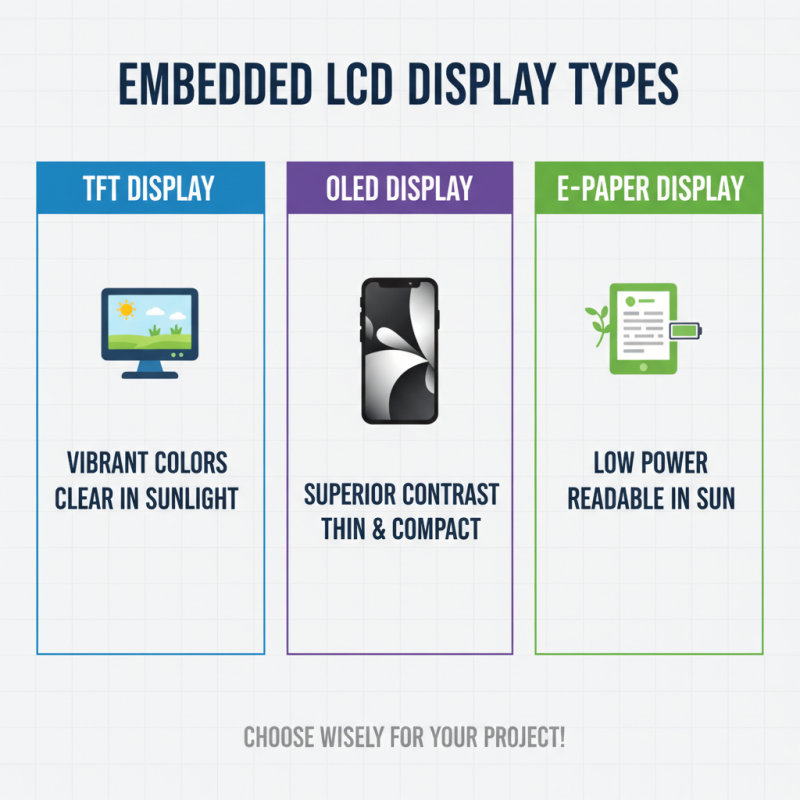
When selecting an embedded LCD display for your project, it is essential to understand the various types and technologies available. Common types include TFT (Thin Film Transistor), OLED (Organic Light Emitting Diode), and e-paper displays, each offering distinct advantages depending on your application. TFT displays are widely used for their vibrant colors and clear visibility in bright environments. OLED displays provide better contrast and can be thinner than traditional LCDs, making them ideal for compact designs. Meanwhile, e-paper displays excel in low power consumption and readability in direct sunlight, which is perfect for applications requiring prolonged battery life.
Tips for choosing the right display: First, consider the environment in which the display will be used. If the project operates outdoors, opt for a display with high brightness and excellent sunlight readability. Second, assess the power requirements; if battery life is crucial, a low-power technology like e-paper may be the best fit. Lastly, think about the required resolution and color depth. For intricate graphics or high-quality images, a higher resolution TFT or OLED display will be necessary.
In addition to these factors, ensure that the display size fits seamlessly into your design. The physical dimensions should complement the overall aesthetics and usability of your project. It's also important to evaluate the connectivity options provided by the display, ensuring compatibility with your existing hardware and software interfaces. With these considerations in mind, you'll be better equipped to select the best embedded LCD display for your specific needs.
Key Factors in Selecting the Right LCD Size and Resolution
When selecting the best embedded LCD display for your project, choosing the right size and resolution is crucial. The size of the display impacts the overall user experience; smaller screens may limit information visibility, while larger screens may consume more power and space. Consider the environment where the display will be used. For compact devices, a smaller screen might be necessary, while industrial applications may benefit from larger, more robust displays that can showcase detailed information.
Resolution is another key factor to consider. Higher resolution displays provide clearer images and text, enhancing usability, particularly for applications requiring fine detail. However, a higher resolution often means increased processing power and costs. Balance your project requirements against your budget and resources. For projects focused on simple displays, a lower resolution may suffice, while high-end applications may demand the crispness of a full HD display.
Tips: Always conduct a mock-up or prototype to test visibility from various distances to determine the optimal size. Additionally, evaluate the display’s resolution in relation to the content it will need to present; this will help ensure clarity and functionality without unnecessary expenses. Adjust the size and resolution based on user feedback to refine your choice further.
Evaluating Display Brightness, Contrast, and Color Accuracy
When selecting the best embedded LCD display for your project, evaluating display brightness, contrast, and color accuracy are crucial factors that can significantly affect the user experience. Brightness, measured in nits, determines how effectively the display can be viewed in various lighting conditions. A higher brightness level is essential for outdoor applications or environments with ample ambient light. Conversely, displays with lower brightness may suffice for indoor settings, where controlled light conditions prevail. It's vital to balance brightness with power consumption, especially in battery-operated devices, to enhance energy efficiency without compromising visibility.
Contrast, the difference between the darkest and lightest parts of the screen, plays a pivotal role in the clarity and sharpness of images. A display with high contrast ratios allows for more vivid visuals, making it easier for users to differentiate between details, even in challenging lighting environments. Additionally, color accuracy is equally important, particularly for applications requiring precise color representation, such as medical devices or graphic design tools. Ensuring that the display can reproduce colors faithfully enhances both functionality and user satisfaction. Therefore, when choosing an embedded LCD display, pay close attention to these attributes to ensure that it meets the specific needs of your project and provides a superior visual experience.
Embedded LCD Display Comparison: Brightness, Contrast, and Color Accuracy
Assessing Power Consumption and Environmental Considerations
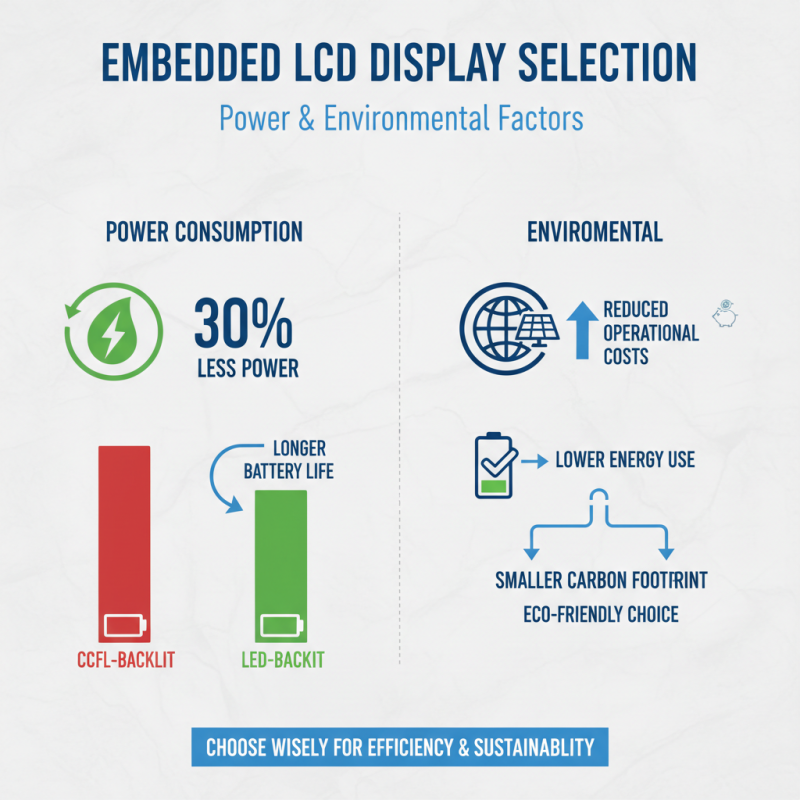
When selecting an embedded LCD display for your project, it’s crucial to assess both power consumption and environmental considerations. The energy efficiency of LCD displays varies significantly among different technologies. For instance, studies indicate that LED-backlit LCDs consume approximately 30% less power compared to traditional CCFL-backlit displays. This difference can dramatically affect the overall energy requirements of an embedded project, especially in battery-powered applications where every milliwatt counts. Therefore, selecting a display with lower power consumption can lead to longer battery life and reduced operational costs.
Equally important, environmental considerations must also be factored into the selection process. The raw materials and manufacturing processes of LCDs can have significant ecological impacts. Reports from the International Energy Agency (IEA) highlight that in 2021, the production of electronic displays was responsible for a substantial percentage of greenhouse gas emissions in the electronics sector. Opting for displays produced with sustainable practices, like utilizing recyclable materials and energy-efficient manufacturing processes, can mitigate these effects. Furthermore, ensuring that the chosen LCD display complies with environmental regulations, such as RoHS or WEEE, not only emphasizes sustainability but also enhances the product's longevity in a market increasingly driven by eco-conscious consumers.
Comparing Costs and Manufacturer Support for Your Project Needs
When selecting the best embedded LCD display for your project, it is essential to consider both costs and the level of manufacturer support available. A competitive pricing structure can significantly impact your project's budget. It’s advisable to assess not only the upfront costs of the displays but also any hidden expenses that may arise during integration and long-term operation. Additional factors such as shipping, handling, and possible tariffs should be factored in to create an accurate financial forecast. Comparing quotes from multiple suppliers can help identify the best option that aligns with your budget without sacrificing quality.
Manufacturer support plays a crucial role in the success of your project. Quality support can include technical assistance during installation, warranty services, and availability of replacement parts. Some manufacturers provide robust documentation and resources that can expedite the development process, whereas others might offer limited support that could lead to potential delays. Evaluating the level of support services offered, such as online technical resources and customer service responsiveness, is vital. Ensuring that the manufacturer is responsive and helpful can save time and resources in the long run, making it a critical factor in your selection process. Balancing cost and support will ultimately lead to a more efficient and successful project outcome.
2025 How to Choose the Best Embedded LCD Display for Your Project - Comparing Costs and Manufacturer Support for Your Project Needs
| Display Size (inches) |
Resolution |
Cost ($) |
Manufacturer Support (Rating/5) |
Lead Time (Weeks) |
| 7 |
800 x 480 |
50 |
4.5 |
2 |
| 10 |
1280 x 800 |
85 |
4.0 |
3 |
| 15 |
1920 x 1080 |
150 |
4.2 |
4 |
| 20 |
2560 x 1440 |
250 |
3.5 |
5 |