What is Full Size LCD Display and Why is it Important?
The importance of Full Size LCD Display in today's tech landscape cannot be overstated. These displays are integral to various industries, from entertainment to education. According to a recent report by MarketsandMarkets, the global LCD market is expected to grow significantly, reaching $88.1 billion by 2025. This underscores the rising demand for high-quality visual experiences.
Full Size LCD Displays offer larger viewing areas and improved clarity, making them essential for presentations and events. A study from Display Supply Chain Consultants indicates that displays over 55 inches accounted for nearly 40% of total shipments in 2022. This trend points to a growing preference for larger, more immersive displays in professional settings.
However, there's room for improvement. While Full Size LCD Displays cater to many needs, they often lack energy efficiency compared to alternatives like OLED. Users must consider these aspects when choosing display technology. Balancing size, quality, and efficiency is critical.
Understanding Full Size LCD Displays: Definition and Features
Full size LCD displays have become a benchmark in modern technology. Their definition lies in their size and functionality. Typically, they are larger than traditional screens, offering enhanced viewing experiences. This size allows for better visibility, making them ideal for presentations and entertainment. Moreover, LCD technology provides vivid colors and sharp images. This is crucial for applications demanding high precision.
The features of full size LCD displays are noteworthy. They offer a wide viewing angle, ensuring visibility from various positions. Many models include touch capabilities, enhancing interactivity. The response time of these displays is often rapid, minimizing lag during fast-moving visuals. However, it's essential to consider potential drawbacks like limited contrast ratios compared to OLED technology. Users might find themselves needing to adjust settings for optimal performance.
Understanding these elements is vital for informed choices. Users should reflect on their specific needs against the strengths and weaknesses of full size LCD displays. Prioritizing features that matter most will lead to a satisfying experience. Ultimately, this awareness fosters better decision-making in a landscape of diverse display technologies.
What is Full Size LCD Display and Why is it Important?
| Feature |
Description |
Importance |
| Size |
Typically ranges from 32 inches to 85 inches. |
Offers ample screen real estate for various applications. |
| Resolution |
Available in Full HD (1920x1080), 4K (3840x2160), and even 8K. |
Higher resolutions provide sharper images and better detail. |
| Panel Type |
Includes IPS, VA, and TN panels. |
Different panels provide varying color accuracy and viewing angles. |
| Brightness |
Ranges typically from 200 cd/m² to over 1000 cd/m². |
Higher brightness is essential for well-lit environments. |
| Response Time |
Commonly between 1ms to 5ms. |
Lower response times reduce motion blur for fast-moving content. |
| Connectivity |
Includes HDMI, DisplayPort, USB, and sometimes wireless options. |
Versatile connectivity options facilitate easy integration with devices. |
| Energy Efficiency |
Designed to consume less power compared to older technologies. |
Lower energy consumption leads to reduced operational costs. |
The Technology Behind Full Size LCD Displays: How They Work
Full-size LCD displays utilize liquid crystal technology to create vibrant visuals. At their core, these displays employ a layer of liquid crystals sandwiched between two glass panels. When an electric current passes through the liquid crystals, they align and manipulate light, producing images with remarkable clarity.
The importance of full-size LCD displays lies in their widespread application. According to industry reports, the global demand for LCD displays is projected to reach over 800 million units by 2025. This growth is driven by the rise in digital signage, gaming, and smart devices. With advancements in LED backlighting, contrast ratios have improved dramatically. This translates to deeper blacks and more vivid colors, enhancing user experience.
Tip: Always consider screen resolution when selecting an LCD display. Higher resolutions provide sharper images and better detail, crucial for professional use. Users often overlook this detail, focusing merely on size.
Despite their advantages, full-size LCD displays face challenges such as color accuracy. Calibration may be necessary for optimal performance. Some users find factory settings insufficient and can be uncertain about how to adjust them. Understanding the calibration process can lead to significant improvements in display quality.
Applications of Full Size LCD Displays in Various Industries
Full size LCD displays play a significant role across various sectors. In healthcare, these displays are crucial for imaging and diagnostics. Hospitals utilize high-resolution LCD screens to monitor patients. A report by MarketsandMarkets states that the global LCD market in healthcare is projected to reach $15 billion by 2025.
In the automotive industry, full size LCD displays enhance safety and user experience. Many manufacturers now use large screens for navigation and infotainment systems. An industry analysis indicates that the automotive display market will grow at a CAGR of 8.5% from 2022 to 2028, underscoring its rising importance.
Tips: When selecting a full size LCD for industrial use, consider factors such as brightness, contrast ratio, and response time. Testing different models is crucial. Ensure compatibility with existing systems for better integration.
Additionally, the retail sector increasingly relies on LCD technology for advertising and information. Digital signage powered by full size LCDs grabs customer attention. A study from Statista reveals that digital signage increases consumer engagement by up to 40%.
However, not all displays meet the necessary durability for demanding environments. Businesses must reflect on their specific needs and evaluate display longevity and maintenance needs.
Advantages of Full Size LCD Displays Over Other Display Types
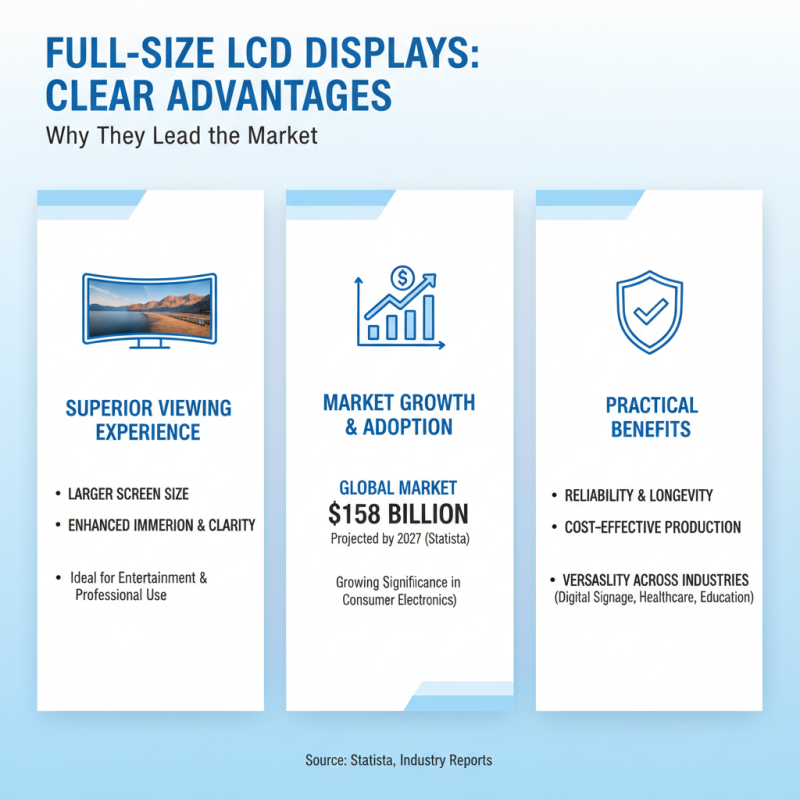
Full-size LCD displays have gained popularity in various fields due to their numerous advantages over other display types. Primarily, these displays offer a larger viewing area, enhancing the overall user experience. According to a report by Statista, the global market for LCD displays is projected to reach approximately $158 billion by 2027, highlighting their growing significance in consumer electronics.
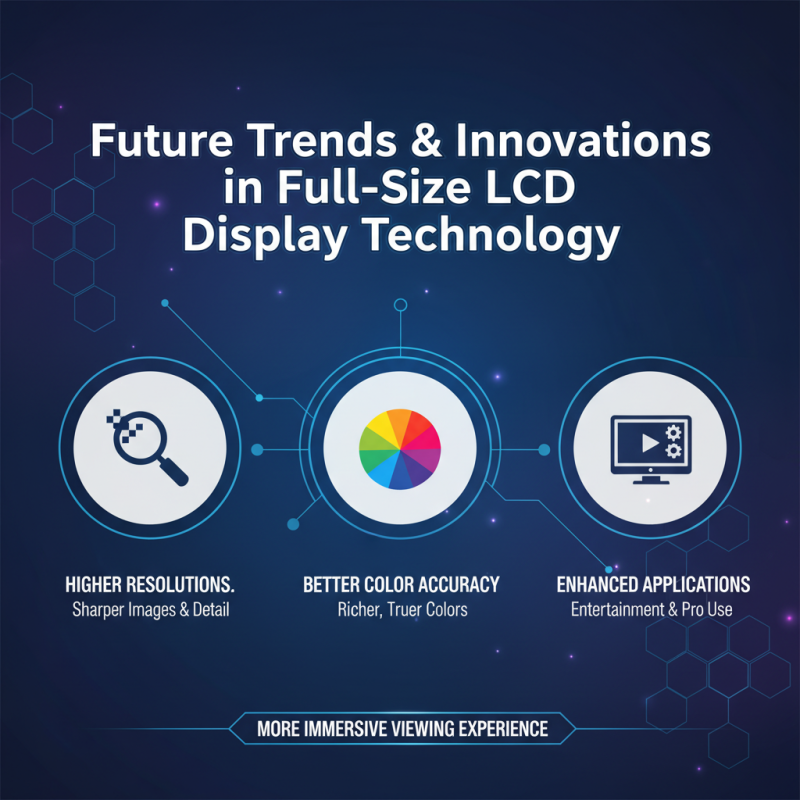
One of the key advantages of full-size LCD displays is their superior resolution. Many high-end LCD panels provide 4K or even 8K quality, allowing for vibrant colors and sharp images. This feature is crucial for professionals in fields like graphic design and video editing, where detail matters. Moreover, full-size displays consume less power compared to traditional CRT and older display technology. This energy efficiency can lead to cost savings in the long run.
However, it’s worth noting that full-size LCD displays may not be perfect. They often suffer from motion blur during fast movements, which can be distracting. Additionally, color reproduction varies across different models, affecting fidelity. The reliance on specific backlight technologies sometimes limits brightness levels. These aspects require careful consideration when choosing the right display for a particular application.