What is a Full Color Lcd Display and How Does It Work?
The world of display technology has significantly evolved, with the Full Color LCD Display at the forefront. This technology is essential for various devices, from smartphones to televisions. Dr. Emily Hart, a renowned expert in display technologies, once noted, “Full Color LCD Displays have transformed how we perceive digital content.” Her words capture the essence of this innovation.
A Full Color LCD Display uses liquid crystals to control light and color. It functions by passing light through a layer of liquid crystals. This process allows the display to create vibrant colors and sharp images. The components of these displays are intricate yet fascinating, merging technology and artistry.
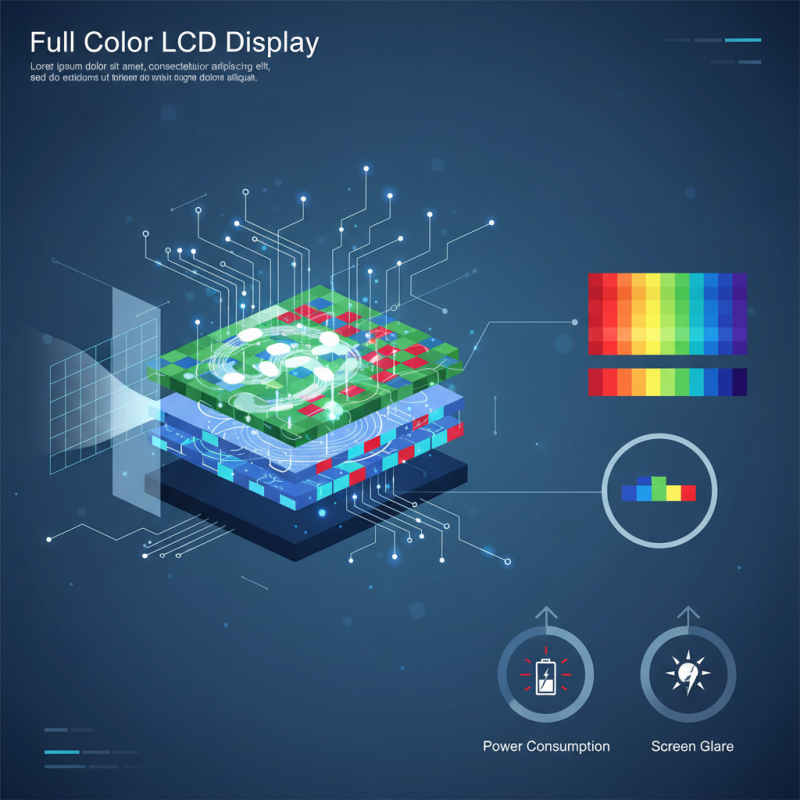
However, as our demand for clarity and brightness increases, challenges arise. Power consumption and screen glare are ongoing issues that need addressing. Balancing quality and performance remains a persistent topic in the industry. The conversation around Full Color LCD Displays continues, highlighting both achievements and areas for improvement.
What is a Full Color LCD Display?
A full-color LCD (Liquid Crystal Display) is a technology that presents images and videos with vibrant colors. This technology uses liquid crystals sandwiched between two glass layers. When electric current passes through these layers, the crystals align, controlling light passage. Thus, different colors can be produced.
A report from the Display Industry Association noted that the global market for LCDs is expected to reach $190 billion by 2025.
The display consists of a backlight and various color filters. The backlight emits white light, which is transformed into red, green, and blue (RGB) colors through these filters. This RGB combination forms the full spectrum of colors visible to the human eye.
According to a research paper published in the Journal of Display Technology, full-color LCD screens can produce over 16 million colors. This capability enhances visual experiences in devices like TVs, monitors, and mobile phones.
However, challenges exist in LCD technology. The colors may not be true to life under different lighting conditions. Additionally, viewing angles can limit fidelity. Recent studies highlight that even with advancements, many displays struggle to maintain consistent quality. This inconsistency can lead to viewer dissatisfaction. As technology evolves, understanding these issues is essential for future improvement in display quality.
History and Evolution of LCD Technology
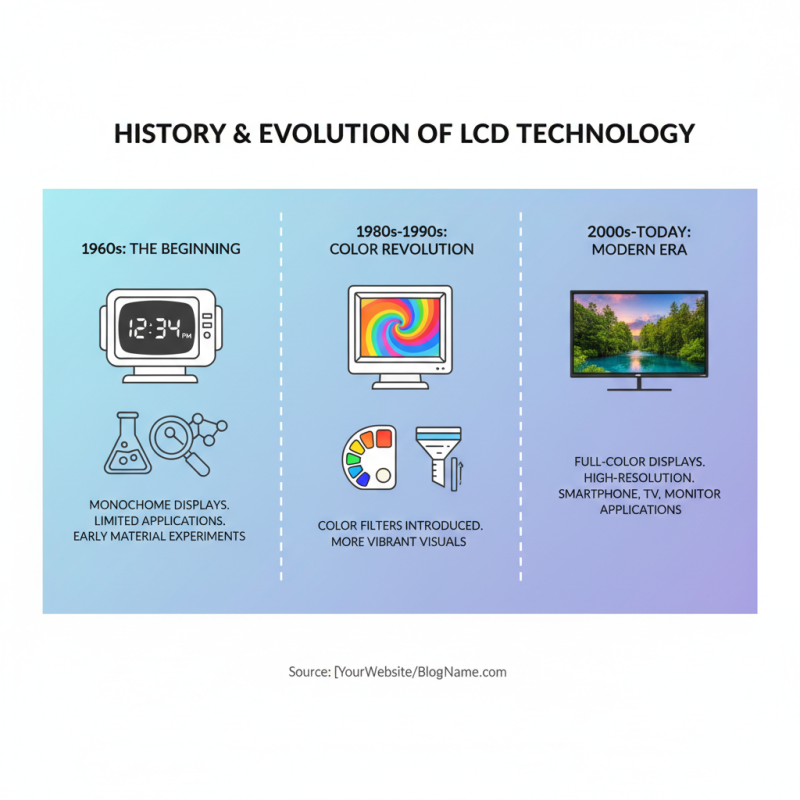
The history of LCD technology dates back to the 1960s. Early liquid crystal displays were monochrome and limited in application. Scientists experimented with different materials to create better displays. Over the decades, improvements in technology allowed for color displays. The introduction of color filters was a game changer. It enabled more vibrant visuals, paving the way for modern applications.
LCD technology evolved significantly in the 1980s. The transition from passive to active matrix displays was critical. This shift improved response times and resolution. As technology advanced, LCDs became smaller and lighter. They found their place in a variety of devices, from calculators to televisions. Today, they are essential in smartphones and monitors.
Tips: When buying an LCD, consider the display's resolution. Higher resolution ensures clearer images. Always check the viewing angles. Poor angles may distort colors. Explore different types of backlighting. Some options might offer better contrast and color accuracy. Remember that not all LCDs are created equal. Take the time to compare features and performance.
Working Principle of Full Color LCD Displays
A full-color LCD display utilizes liquid crystals to produce vibrant images. These displays consist of multiple layers, including a backlight, a liquid crystal layer, and a color filter. The interaction between these components creates the colors we see on screen. Light from the backlight passes through the liquid crystal layer, which modulates the light. This modulation is key to displaying different colors and images.
The working principle of full-color LCDs involves aligning the liquid crystals in response to electrical signals. When these crystals are aligned correctly, they either block or allow light to pass through. Each pixel is made of sub-pixels—red, green, and blue. These sub-pixels mix light to generate a wide range of colors. Adjusting the voltage applied to the liquid crystals will change their alignment and thus the color output.
However, this technology has its limitations. Viewing angles can affect color accuracy, and brightness may vary in different lighting conditions. Advances are needed to improve these aspects. Enhanced color reproduction and wider viewing angles are areas for future development. Understanding these shortcomings is critical for innovation in display technology.
Key Components of a Full Color LCD Display
A full-color LCD display consists of several key components that work together to create vibrant images. The main elements include the liquid crystal layer, color filters, and backlighting. The liquid crystals control light passage when electrically stimulated. They twist and turn, altering the light direction. This manipulation allows for a broad range of colors to be displayed.
Color filters are essential. They sit atop the liquid crystal layer and consist of red, green, and blue (RGB) sub-pixels. Each pixel combines these colors in various intensities. This combination creates the full spectrum of colors visible to the human eye. According to industry reports, a good display can reproduce more than 16 million colors. Despite this impressive range, some low-quality models often fail to deliver accurate color reproduction.
Backlighting is crucial, providing the necessary illumination for the display. LED technology is now predominant due to its efficiency and longevity. Yet, some models still rely on older fluorescent technologies, which can lead to uneven brightness. This inconsistency might negatively affect the viewer's experience. With the rapid advancement of display technology, manufacturers need to resist complacency and continually innovate.
What is a Full Color LCD Display and How Does It Work? - Key Components of a Full Color LCD Display
| Component |
Description |
Function |
| Liquid Crystal Layer |
A layer containing liquid crystals that react to electric currents. |
Manipulates light to create images by aligning crystals to control pixel color. |
| Backlight |
An LED or fluorescent light source positioned behind the LCD. |
Illuminates the display to allow visibility of images and colors. |
| Color Filters |
Filters that allow specific colors of light to pass through. |
Produce the desired color output by combining red, green, and blue light. |
| Polarizers |
Filters that only allow light waves of a certain orientation to pass. |
Control the amount of light that reaches the viewer’s eyes. |
| Driver Circuitry |
Electronic circuits that control the voltage to the liquid crystals. |
Enables the precise control of pixels for image rendering. |
Applications and Advantages of Full Color LCD Displays
Full color LCD displays have become essential in various applications, from smartphones to televisions and digital signage. According to a recent market research report, the global LCD display market is expected to grow significantly, approaching $100 billion by 2027. This growth reflects the increasing demand for high-resolution displays that offer vibrant colors and enhanced viewing experiences.
One notable application of full color LCD displays is in the medical field. Medical imaging devices utilize these displays to present clear and precise diagnoses. A study found that utilizing high-quality LCD technology in hospitals improved the accuracy of assessments by nearly 15%. This is crucial for patient care. However, challenges remain. Not all medical professionals are trained to interpret LCD images effectively. This gap can lead to misdiagnoses, highlighting a need for ongoing education.
In the realm of retail, full color LCD displays enhance customer experience. Digital signage attracts attention and can increase sales by up to 30%. Yet, over-saturation of displays and improper placement can detract from the intended message. Many retailers overlook this, resulting in diminished returns on investment. Consequently, businesses must strategize display placements carefully to maximize impact.
These technologies continually evolve, but imperfections still exist. Manufacturers often focus on brightness and color accuracy. However, they may overlook factors like energy efficiency and durability. Balancing these aspects is vital. Exploring these complexities will drive further innovations in the field.
Full Color LCD Display Applications and Advantages