What is an Embedded Lcd Display and How Does it Work?
Embedded LCD displays have become a vital component in various industries. According to a report by MarketsandMarkets, the global embedded display market is projected to reach $29.09 billion by 2026. This growth highlights the importance of understanding how embedded LCD displays function.
An embedded LCD display is designed to fit seamlessly into devices. These displays serve as user interfaces in products such as medical devices, automotive dashboards, and home appliances. Their ability to provide clear visuals in compact forms has contributed to their popularity. The technology behind them involves liquid crystals sandwiched between layers of glass or plastic. This structure allows for incredible flexibility in design.
Despite advancements, challenges exist. Manufacturers face issues with display resolution and power consumption. Additionally, the integration of touch capabilities can complicate production. These complexities remind us that while embedded LCD displays offer many advantages, there is still room for improvement. Industry stakeholders must continue to innovate to meet growing demands for efficiency and functionality.

What is an Embedded LCD Display? Definition and Overview
Embedded LCD displays are essential components in various electronic devices. These displays are integrated directly within gadgets, allowing for streamlined designs. Common applications include automotive dashboards and handheld devices. They offer vibrant imagery and sharp text, crucial for user interfaces. According to industry reports, the global market for embedded displays is expected to grow steadily, with a compound annual growth rate (CAGR) of around 5% from 2021 to 2026.
The mechanics behind embedded LCD displays involve a liquid crystal layer sandwiched between two glass panels. This structure helps control the light passing through, creating images. These displays can consume less power, which is vital for portable devices. Yet, designers often struggle with challenges such as visibility in bright light. Users may find colors appear differently under varied lighting conditions.
Size and resolution are critical factors affecting display performance. Smaller, high-resolution screens are harder to manufacture, causing supply issues. Companies often face pressure to balance quality with cost. As technology evolves, new manufacturing techniques may improve these displays. However, finding the right balance between performance and affordability remains essential for innovation in this field.
Key Components of Embedded LCD Displays and Their Functions
Embedded LCD displays are integral to many modern devices. They are composed of several key components. Each part plays a vital role in functionality.
The liquid crystal layer is crucial. It controls light modulation. This layer is sandwiched between two polarizing filters. It allows images to be displayed. However, managing color accuracy can be tricky. Small discrepancies can lead to inaccurate displays.
Another essential component is the backlight. It provides illumination, making displays visible in various environments. LED backlighting is common, but it requires careful design. Too bright, and images become washed out. Too dim, and visibility suffers. Additionally, the driver circuitry controls the display’s performance. Poor communication with this circuitry can lead to lag and ghosting effects, impacting user experience.
How Embedded LCD Displays Operate: A Technical Breakdown
Embedded LCD displays are specialized screens used in various devices, from medical equipment to automotive dashboards. They provide essential visual feedback, often in compact sizes. The technology behind them integrates liquid crystal and backlighting systems, creating clear visuals even in bright environments. Reports indicate that the global embedded display market is expected to grow at a compound annual growth rate (CAGR) of 7.5% between 2021 and 2026, underscoring their increasing importance.
Operating an embedded LCD display involves several stages. Light passes through liquid crystals, which manipulate it to form images. This process relies heavily on precision engineering, causing potential issues like misalignment. Achieving optimal brightness and color accuracy can also be challenging. According to a market research report, over 40% of device manufacturers face difficulties in calibrating these displays for consistent quality. As technology advances, improving these aspects remains crucial for a seamless consumer experience.
What is an Embedded Lcd Display and How Does it Work?
| Feature |
Description |
| Display Type |
Liquid Crystal Display (LCD) |
| Technology |
Passive Matrix and Active Matrix (TFT) |
| Resolution |
Varies from 240x320 to 1920x1080 pixels |
| Power Consumption |
Generally low, around 0.5W to 5W based on size and usage |
| Applications |
Consumer electronics, automotive displays, industrial devices |
| Operating Temperature |
Typically -20°C to +70°C |
| Interface Types |
Parallel, Serial (SPI, I2C) |
| Backlight Technology |
LED, CCFL |
Applications of Embedded LCD Displays in Various Industries
Embedded LCD displays have revolutionized various industries. These screens are versatile. They find use in healthcare, automotive, and consumer electronics. According to a recent market analysis, the embedded LCD display market is projected to grow by 5.4% annually. This growth shows just how significant these displays are to technology today.
In healthcare, embedded LCDs are vital. They provide clear visuals in medical devices. Doctors rely on accurate visuals for diagnosis. For instance, embedded displays in ultrasound machines enhance image clarity. In the automotive sector, these displays serve as dashboards and infotainment systems. They enable real-time data visibility for drivers. Poor interface design can distract drivers, leading to potential risks. Though useful, many solutions still need improvement.
Consumer electronics utilize these displays too. Smartphones frequently have embedded LCD screens, enhancing user interaction. Yet, production costs can be high. Companies must balance quality and affordability. This balancing act is crucial. The market demands both cutting-edge technology and reasonable pricing. As industries continue to innovate, assessing the effectiveness of these displays is important. Mistakes can occur, revealing the need for continual evaluation.
Applications of Embedded LCD Displays in Various Industries
Market Trends and Growth Projections for Embedded LCD Technology
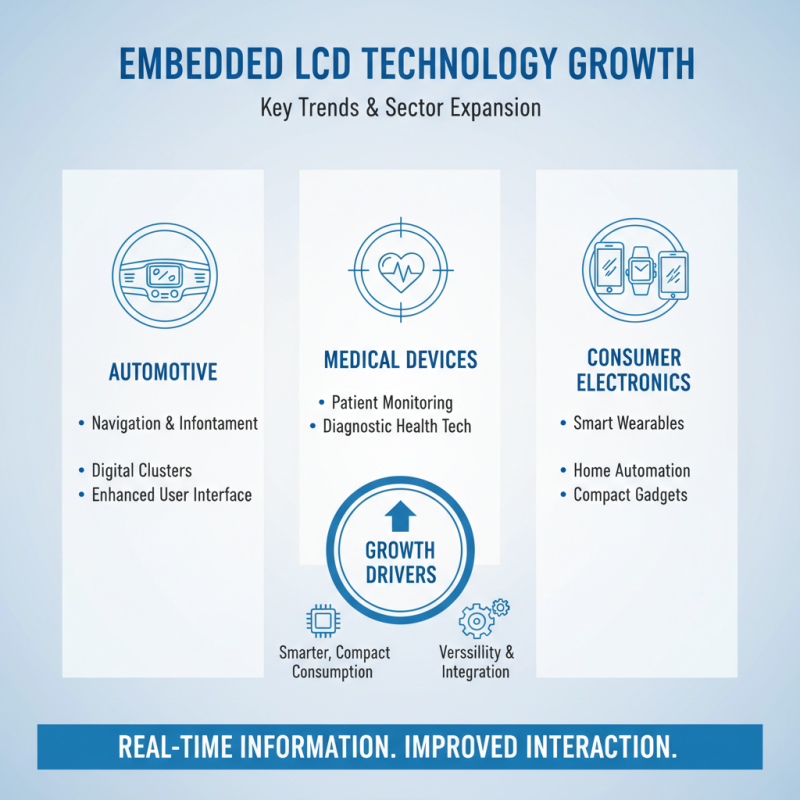
Embedded LCD technology is seeing significant growth in various sectors, including automotive, medical, and consumer electronics. As devices become smarter and more compact, the demand for embedded displays is rising. These displays are integrated into products, providing real-time information and enhancing user interaction. They are especially valued for their low power consumption and versatility, fitting seamlessly into different applications.
Tips: When considering embedded displays, think about the layout. The size and clarity of the display matter. Consider how it will fit within your device's design. Always prioritize user experience in your planning.
Market trends indicate an ongoing shift towards larger and more vibrant screens. Innovations in display technology, such as better contrast ratios and improved viewing angles, are driving this demand. Industries are focusing on integrating touch capabilities and advanced graphics. However, some companies struggle with manufacturing costs and supply chain issues.
Tips: Research the available technologies before making a decision. Each type has its pros and cons. Being informed helps in choosing the right display for specific needs. Understand that higher costs do not always equate to better quality.