What Are the Different Types of LCD Modules and Their Uses?
In the rapidly evolving tech landscape, the significance of LCD modules cannot be overstated. Dr. Emily Chen, an expert in display technology, emphasizes, “LCD modules have become crucial for diverse applications in modern devices.” These modules serve as the backbone for everything from smartphones to medical equipment. Their versatility is a key attribute, showcasing their relevance across various sectors.
Different types of LCD modules cater to distinct needs. For instance, graphic LCDs excel in detailed visuals, while segment displays find their niche in simpler informational applications. This diversity highlights the complexity and depth of the LCD module market. However, industry professionals often face challenges in choosing the right module. The range of options can be overwhelming, requiring thoughtful evaluation and expertise.
As the demand for enhanced user experiences grows, designers must reflect on their choices. Opting for the best LCD module means balancing functionality with cost. Each application holds unique requirements, leading to potential missteps. Ultimately, understanding the various types of LCD modules and their uses remains essential for innovation.
Types of LCD Modules: Overview and Classification
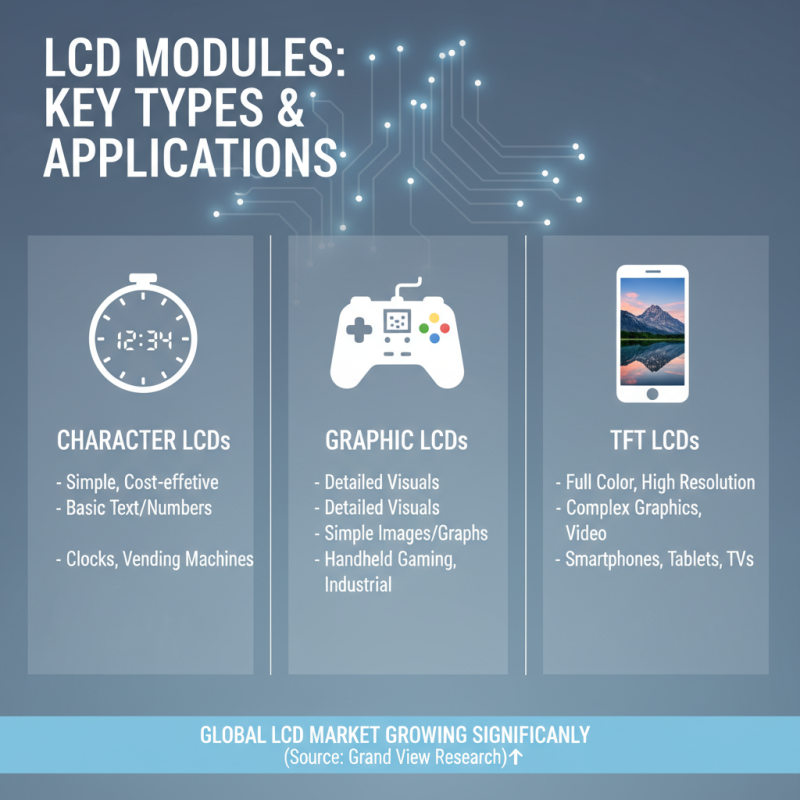
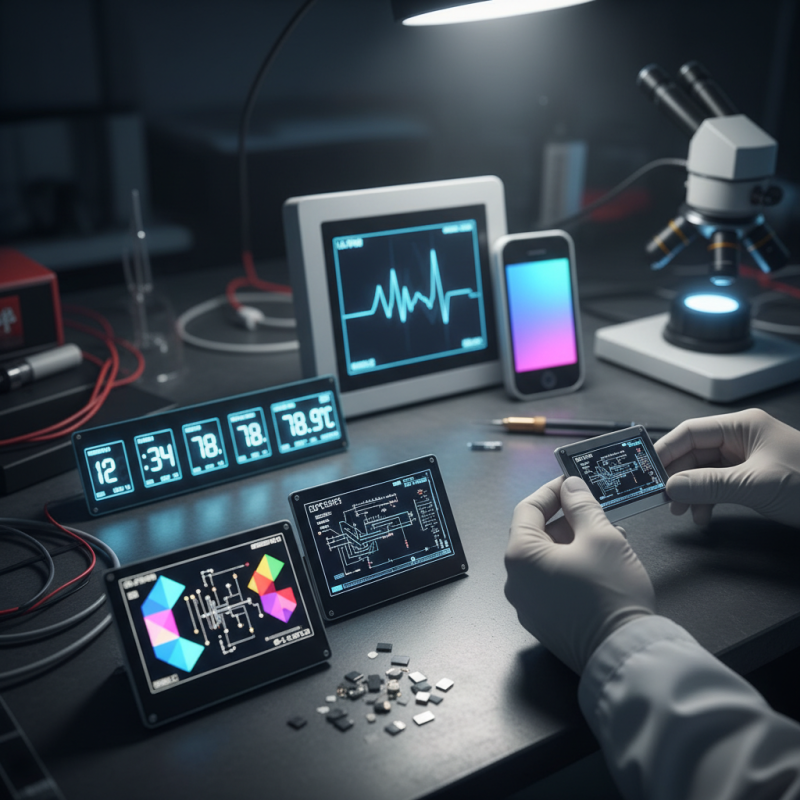
LCD modules are crucial in various applications today. They come in different types, each suited for specific purposes. The main types include Character LCDs, Graphic LCDs, and TFT LCDs. Character LCDs are simple and cost-effective, often used in basic displays like clocks or vending machines. Graphic LCDs provide more detailed visuals, making them suitable for devices like handheld gaming consoles. Meanwhile, TFT LCDs offer full-color displays and high resolution, widely used in smartphones and tablets. According to a report by Grand View Research, the global LCD market is expected to grow significantly, indicating a rising demand for these displays.
Tips: When selecting an LCD module, consider the brightness and viewing angles. These factors greatly influence user experience. Ensure the module's performance aligns with your specific needs.
Most projects may not require all features. It’s vital to identify the essential aspects. For example, a minimal character display might suffice in simpler applications. Overestimating requirements can lead to higher costs without added value. Always reflect on your project’s actual needs to avoid unnecessary complexities.
Characteristics of Passive vs. Active Matrix LCD Modules
When exploring LCD modules, it's essential to understand the key differences between passive and active matrix technologies.
Passive matrix LCDs feature a grid of lines. These lines essentially control the individual pixels. While they are simpler and often cheaper, they may struggle with response times.
This can lead to motion blur. In practical terms, this makes them less suitable for fast-moving images.
On the other hand, active matrix LCDs employ thin-film transistors. These transistors control each pixel directly, enhancing performance.
The result is faster response times and superior image quality. Colors appear more vibrant, and viewing angles improve significantly.
However, these benefits come at a higher cost. Some users prefer using passive matrix displays for simple applications. They consume less power and may be adequate for static content.
It’s also worth noting that both types have their shortcomings. Passive matrix displays can appear dimmer in certain conditions. Meanwhile, active matrix models can be more complex, potentially leading to higher failure rates.
Picking the right type depends on specific needs and budget considerations.
Common Applications of LCD Modules in Consumer Electronics
LCD modules play a crucial role in consumer electronics. They are widely used in devices such as smartphones, tablets, and televisions. According to a recent market report, the global LCD display market is projected to reach $100 billion by 2025. This growth highlights the ongoing demand for high-quality displays.
In smartphones, for example, LCD modules provide clear visuals. They deliver vibrant colors and sharp images. Nearly 50% of smartphone displays use LCD technology. However, there is a challenge with energy consumption. While LCDs have improved, some users report battery drain issues. In tablets, LCDs enhance gaming and video experiences. Yet, the touch response can lag occasionally, leading to frustration.
Television sets have also embraced LCD technology. Many modern TVs utilize LCD modules for their thin design and lightweight nature. A report indicates that LCD TVs accounted for over 70% of the total TV market share in 2022. Despite these advantages, some consumers desire deeper blacks and better contrast. They find OLED displays more appealing, prompting LCD manufacturers to innovate further.
Common Applications of LCD Modules in Consumer Electronics
Specialized LCD Modules for Industrial and Medical Use
In specialized fields like industrial and medical applications, LCD modules play a crucial role. These modules are designed for durability and performance. They often feature enhanced brightness, contrast, and viewing angles. For instance, reports indicate that the global market for industrial LCDs is projected to reach $9 billion by 2025, reflecting their vital importance in automation and monitoring systems.
Medical LCD modules must meet strict standards for reliability and clarity. They are used in devices such as ultrasound machines and patient monitors. According to recent studies, the medical display market is expected to grow at a CAGR of 7.4% from 2022 to 2029. This growth emphasizes the increasing demand for high-quality visual outputs in diagnostics and imaging.
**Tips:** When selecting an LCD module for industrial or medical use, consider factors like operating temperature and power consumption. Small oversights in these areas can lead to significant performance issues. Always ensure compliance with regulatory standards to avoid setbacks.
Emerging Trends in LCD Technology and Future Developments
Emerging trends in LCD technology indicate rapid advancements and growing applications. According to a recent report by MarketsandMarkets, the global LCD module market is projected to reach $88.01 billion by 2025, reflecting a CAGR of 5.6% from 2020. This growth highlights the increasing demand for high-resolution displays in sectors like automotive and healthcare.
One interesting trend is the rise of flexible LCDs. These displays can be bent and shaped, allowing for innovative design possibilities. They're gaining traction in mobile devices and wearables. However, achieving durability remains a challenge. Manufacturers struggle with producing screens that are both flexible and resistant to wear. Furthermore, the push for energy-efficient LCDs is crucial, as global energy consumption continues to rise.
Another notable trend is the integration of touch capabilities in LCD modules. As more devices require interactivity, the demand for touch-enabled screens is surging. A study by Statista shows that touch screen shipments could exceed 1 billion units by 2024. Yet, concerns about tactile response and longevity pose obstacles. Balancing responsiveness with durability is vital for manufacturers to keep pace with evolving consumer expectations.
What Are the Different Types of LCD Modules and Their Uses?
| Type of LCD Module |
Key Features |
Common Uses |
Future Trends |
| TFT LCD |
High resolution and fast response time |
Smartphones, tablets, and laptops |
Increase in flexible displays and touchscreen integration |
| STN LCD |
Low power consumption and basic color rendering |
Calculator displays and basic electronic devices |
More applications in low-power IoT devices |
| IPS LCD |
Wide viewing angles and better color accuracy |
High-end smartphones and TVs |
Development of OLED-like performance in LCDs |
| VA LCD |
Excellent contrast and deep blacks |
TVs and monitors |
Advancements in backlighting technologies |
| OLED |
Self-emissive pixels for true black levels |
Higher-end displays and wearable technology |
Integration into everyday items like clothing |