How to Choose the Best Full Color LCD Display for Your Needs
When it comes to selecting the best Full Color LCD Display for your specific needs, understanding the essential features and capabilities of these screens is crucial. According to John Smith, an industry expert with over 20 years of experience in display technologies, "The key to choosing the right Full Color LCD Display lies in identifying the application requirements and ensuring the display can meet those demands." His insight highlights the importance of aligning the features of the display with how it will be utilized, whether for professional presentations, gaming, or industrial applications.
The market offers a wide variety of Full Color LCD Displays, each designed for different purposes and environments. Factors such as resolution, brightness, color accuracy, and response time play a significant role in determining which display is ideal for your use case. As you embark on the journey to find the right Full Color LCD Display, it is essential to consider not just the specifications but also your personal or organizational needs. This tailored approach can enhance both the performance and longevity of your display investment.
Understanding Full Color LCD Display Technologies
When selecting a full color LCD display, understanding the underlying technologies is crucial for making an informed decision. The most common technologies include Twisted Nematic (TN), In-Plane Switching (IPS), and Vertical Alignment (VA). TN panels, known for their fast response times, are ideal for gaming and fast-moving visuals but typically have poorer color accuracy and viewing angles. Conversely, IPS displays offer superior color reproduction and wider viewing angles, making them a preferred choice for graphic design and media consumption. VA panels strike a balance between the two, providing better contrast ratios and deeper blacks, although they can suffer from slower response times compared to TN panels.
Another important aspect to consider is the resolution and panel size. Higher resolution displays often provide clearer and more detailed images, which are essential for tasks that require precision, such as photo editing or professional presentations. Additionally, sizes ranging from small screens suited for handheld devices to larger formats for wall-mounted installations cater to different needs. Understanding these technological differences and their implications on performance can significantly enhance the user experience and ensure that the chosen display aligns well with specific usage scenarios.
Comparison of Full Color LCD Display Technologies
Key Factors to Consider When Choosing a Full Color LCD Display
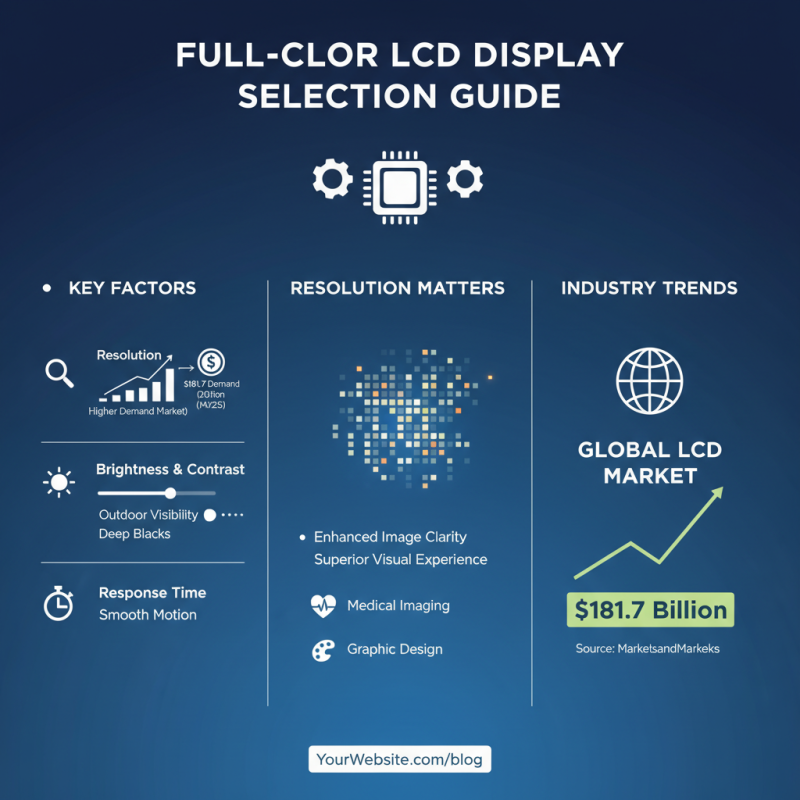
When selecting a full-color LCD display, it's vital to consider several key factors that can significantly impact performance and user experience. One of the primary considerations is the resolution of the display. According to a recent industry report by MarketsandMarkets, higher resolution displays are increasingly in demand, with the global market for LCD displays expected to reach $181.7 billion by 2025. A display with a high resolution not only enhances image clarity but also improves the overall visual experience, particularly for applications such as medical imaging and graphic design.
Another critical factor is the color gamut, which refers to the range of colors the display can reproduce. The industry standard for professional-grade displays often lies within the Adobe RGB color space, which encompasses a broader spectrum than the sRGB space commonly used for general applications. A display with a wider color gamut can reproduce more vibrant images, which is essential for professionals working in fields like photography and video editing. According to a projection from Grand View Research, the demand for displays with advanced color accuracy is expected to rise, emphasizing the importance of selecting a display that meets specific color requirements for your work.
Lastly, consider the viewing angles offered by the LCD display. The performance of an LCD can vary significantly based on the viewer's perspective, and displays equipped with IPS (In-Plane Switching) technology typically provide superior viewing angles and color consistency. Research has shown that displays with wide viewing angles are increasingly being favored in collaborative environments, where multiple users need to view a screen simultaneously. This trend highlights the necessity of evaluating how a display will be used in your specific context to ensure optimal performance and usability.
Assessing Size and Resolution for Your Display Needs
When assessing the size and resolution of a full color LCD display, it is crucial to consider the intended use and viewing distance. Larger displays offer a more immersive experience, making them ideal for presentations or public displays. However, for personal use, such as gaming or desktop applications, a smaller screen may suffice. The ideal size often depends on the space available and the viewer's preferences, with common sizes ranging from 7 inches for portable devices to over 30 inches for large monitors.
Resolution plays a vital role in determining the clarity and detail of the images displayed. Higher resolutions, such as Full HD (1920x1080) or 4K (3840x2160), produce sharper visuals, making them suitable for graphic design, video editing, and gaming where detail is paramount. It's essential to match the resolution with the screen size; a large screen with a low resolution may result in pixelation, while a smaller screen with a high resolution can provide crisp visuals without straining the eyes. Therefore, when selecting your LCD display, carefully evaluate both size and resolution to ensure a suitable fit for your specific needs and environment.
Evaluating Color Accuracy and Brightness Levels
When selecting a full-color LCD display, evaluating color accuracy and brightness levels is crucial to ensure the screen meets your specific needs. Color accuracy refers to how closely the colors displayed match their true values, which is essential for tasks such as graphic design, photography, or any visual content creation. A display with high color accuracy will deliver vibrant and lifelike images, reducing the risk of color discrepancies in your work.
Brightness levels also play a significant role in the visibility of your display, especially in varying lighting conditions. A brighter screen can make it easier to view content in well-lit environments or outdoors. Take into consideration the ambient light in your workspace and the intended use of the display. Higher brightness levels can enhance user experience, allowing for better readability and overall visibility.
**Tips:** When assessing color accuracy, consider displays that offer wide color gamuts and calibration options for optimal results. For brightness levels, look for displays with adjustable settings to customize your viewing experience according to your surroundings. Finally, don’t forget to read user reviews and professional assessments that focus on these specifications to make a more informed choice.
How to Choose the Best Full Color LCD Display for Your Needs - Evaluating Color Accuracy and Brightness Levels
| Display Model |
Color Accuracy (% sRGB) |
Brightness (nits) |
Contrast Ratio |
Response Time (ms) |
| Model A |
98% |
300 |
1000:1 |
5 |
| Model B |
95% |
350 |
1200:1 |
6 |
| Model C |
90% |
250 |
800:1 |
4 |
| Model D |
97% |
400 |
1500:1 |
7 |
| Model E |
96% |
280 |
900:1 |
8 |
Comparing Cost and Performance of Different Full Color LCD Displays
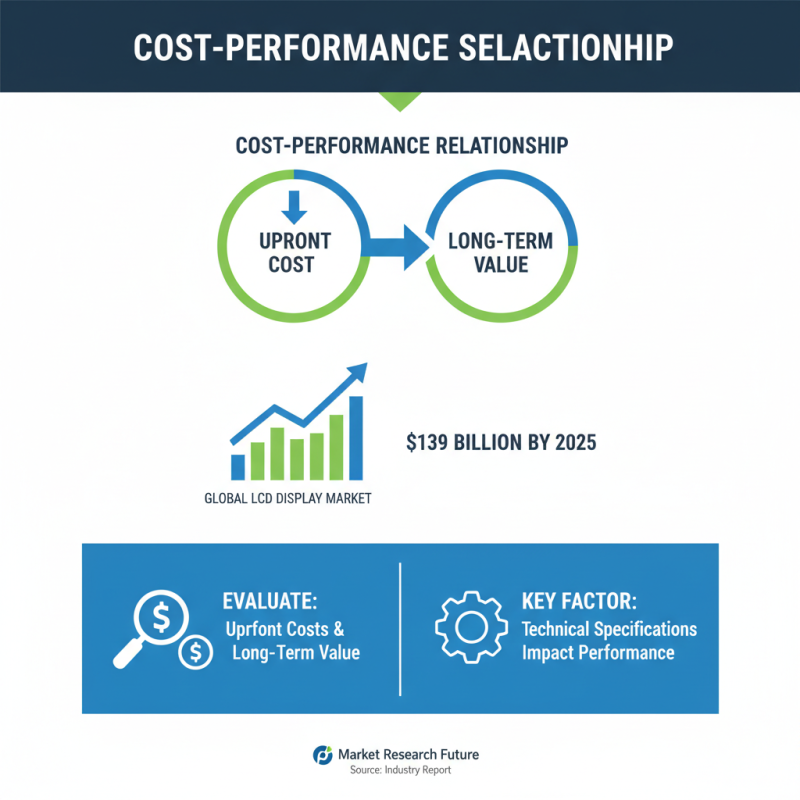
When selecting a full color LCD display, understanding the cost-performance relationship is essential for making an informed decision. According to a recent industry report by Market Research Future, the global LCD display market is projected to reach $139 billion by 2025, primarily driven by advancements in display technology and increasing demand for rich multimedia content. This growth highlights the importance of evaluating both the upfront costs and the long-term value these displays provide, as the technical specs can significantly impact overall performance.
One critical factor to consider is the display resolution. High-definition displays (1080p and above) often command a higher price but may enhance the user experience by providing sharper and more vibrant images. As per a report from Technavio, displays with higher pixel density can demonstrate better color accuracy and wider viewing angles, making them a worthy investment for applications requiring precise visual representation.
Tips: When comparing displays, look for specifications such as brightness (measured in nits), contrast ratio, and color gamut. A brighter display with a wider color gamut can improve visibility in various lighting conditions, which is crucial for outdoor applications. Additionally, consider the display's response time and refresh rate if it is intended for dynamic content, as these factors greatly influence user experience.
Choosing the right full color LCD display involves balancing initial costs against performance benefits. By analyzing the intended application and desired features, users can identify displays that not only fit their budget but also provide the best performance tailored to their needs.