How to Choose the Right LCD Module for Your Project?
Choosing the right LCD Module for your project can be challenging. There are many factors to consider. Various sizes, resolutions, and interfaces are available to meet different needs.
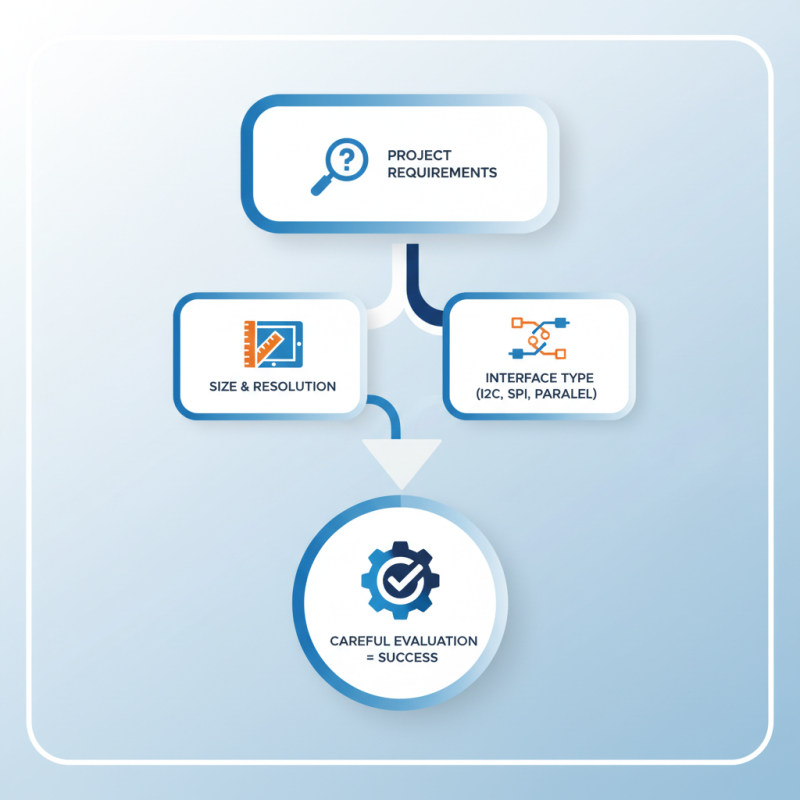
Consider your project’s requirements first. What is the size of your display area? An LCD Module must fit well within your design. The resolution is also vital. Higher resolutions mean better images, but they can increase costs.
Another aspect to reflect on is the interface type. Will you be using I2C, SPI, or parallel? Each has its advantages and drawbacks. It's easy to overlook these details. Misjudging them can lead to complications later. Therefore, evaluating your needs carefully is crucial for success.
Understanding the Basics of LCD Technology
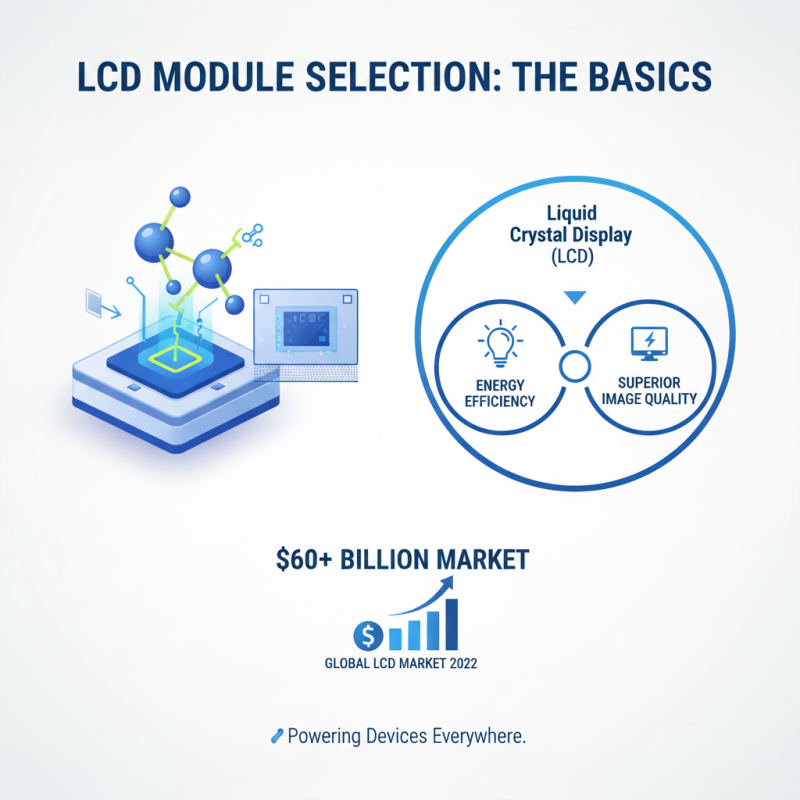
When selecting the right LCD module, understanding the basics of LCD technology is crucial. Liquid Crystal Display (LCD) uses liquid crystals manipulated by electric currents. This technology enables excellent image quality and energy efficiency. In 2022, the market for LCDs reached over $60 billion, indicating their widespread use across devices.
Different types of LCDs exist, such as Twisted Nematic (TN) and In-Plane Switching (IPS). TN panels offer faster response times. However, they often lack color accuracy. On the other hand, IPS panels provide better viewing angles and color reproduction, but they may consume more power. This trade-off is essential to consider based on your project's needs.
Choosing the right resolution is also vital. Higher resolutions yield clearer images, yet they may require more processing power. Reports indicate that 1080p displays are increasingly common in various applications. However, in some scenarios, lower resolution might suffice. Balancing image clarity and system performance can be challenging.
Identifying the Key Specifications for Your Project Needs
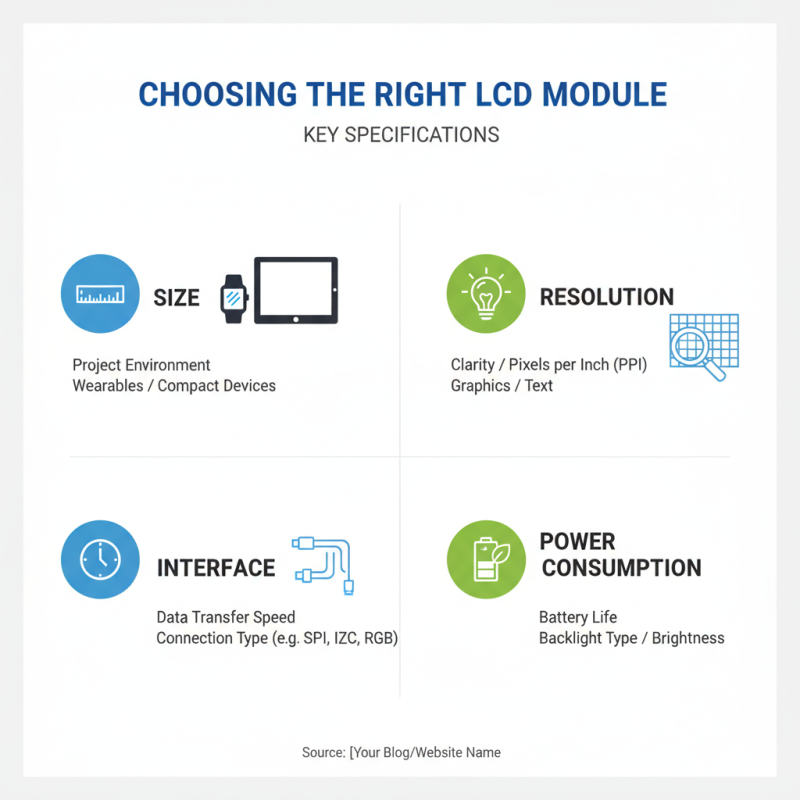
Choosing the right LCD module is essential for any project. Understanding the key specifications is crucial. Start with size. A larger screen may look impressive but can take up a lot of space. Consider your project environment. A compact design might be required for wearables or smaller devices.
Next, resolution plays a significant role. Higher resolution provides crisp images, but it can increase costs and power consumption. Think about the intended use. A low-resolution display may suffice for simple tasks, like showing text. Contrast ratio also matters. A higher contrast ratio improves readability in bright environments.
You should also consider power requirements. Some modules consume significant power, which can affect battery life. Always evaluate the operating temperature range. If the module won’t withstand your project’s conditions, it’s not a good choice. There’s a balance to achieve here. It’s easy to get caught up in features, but practicality should not be ignored.
Evaluating Different Types of LCD Modules Available
When evaluating different types of LCD modules for your project, start with your specific needs. Consider the display size and resolution. A larger screen can enhance visibility. However, it may require more power. There are various types of LCDs, such as character and graphical displays. Character displays are simpler and often cheaper, while graphical displays offer more versatility.
Next, pay attention to the interface types. Different modules use varying communication protocols, like SPI or I2C. Ensure the module you choose is compatible with your microcontroller. This compatibility can make or break your project. Also, consider the backlight options available. Some modules have built-in backlights, while others do not. Built-in options can simplify design but may limit brightness.
It's also essential to reflect on the environmental conditions where the device will be used. Certain LCDs perform better under specific temperatures or lighting conditions. Failing to choose the right one could lead to visibility issues or even damage. Lastly, review available documentation. Good support materials are crucial for troubleshooting. If documentation is lacking, it may pose challenges down the line. Each choice has its pros and cons, and weighing them carefully is vital.
Assessing Compatibility with Your Hardware and Software
When choosing an LCD module for your project, compatibility is crucial. This involves checking both hardware and software. A mismatch can lead to functionality issues, impacting your entire project. It's essential to understand the specifications of your microcontroller. Verify the voltage requirements and signal types the module accepts.
Tips: Always examine the pin configuration. Ensure it aligns with your hardware's connections. Miswiring can lead to silent failures that are hard to diagnose. You might overlook details like this in your haste.
Software compatibility also matters. The LCD driver you plan to use must support the module. Sometimes, documentation is unclear. Take time to read community forums. Experience from others can guide you significantly. If the module requires specific libraries, ensure they're available in your development environment.
Tips: Prototype early with basic code. This helps identify issues quickly. Running simple display tests can reveal deeper compatibility problems. Don't ignore the importance of iterations. Each prototype teaches you more about your system.
Considering Environmental Factors and Display Conditions
When choosing an LCD module, environmental factors play a crucial role. Outdoor displays face challenges like sunlight and weather. High brightness is essential for readability. Think about the module's temperature range too. Some modules perform poorly in extreme heat or cold. Consider how humidity can affect display performance. Water damage is a real concern if the enclosure is not proper.
Display conditions also matter significantly. Is the screen for static images or dynamic video? Refresh rates can impact viewing quality. For projects requiring touch input, ensure the module supports it well. Glare can be an issue in bright settings. Anti-glare coatings might help, but they can also affect color accuracy. Always weigh the pros and cons carefully. The right choice shouldn't just depend on specs, but also on how the module will be used in real life.
How to Choose the Right LCD Module for Your Project? - Considering Environmental Factors and Display Conditions
| Dimension |
Consideration |
Example Values |
| Operating Temperature |
Selection based on environment (indoor/outdoor) |
-20°C to 70°C |
| Display Brightness |
Required for readability in bright conditions |
200 to 1500 nits |
| Viewing Angle |
Importance of visibility from various angles |
60° to 180° |
| Contrast Ratio |
Impact on clarity and detail |
1000:1 to 3000:1 |
| Power Consumption |
Vital for portable or battery-operated devices |
<50 mA to >200 mA |