Why Choose True Color Lcd Screen for Your Display Needs?
In today’s fast-paced digital landscape, choosing the right display technology is crucial. A True Color LCD Screen stands out among various options. It provides vibrant colors and sharp images, enhancing the overall viewing experience. The accuracy of colors can be vital for tasks like graphic design or photography.
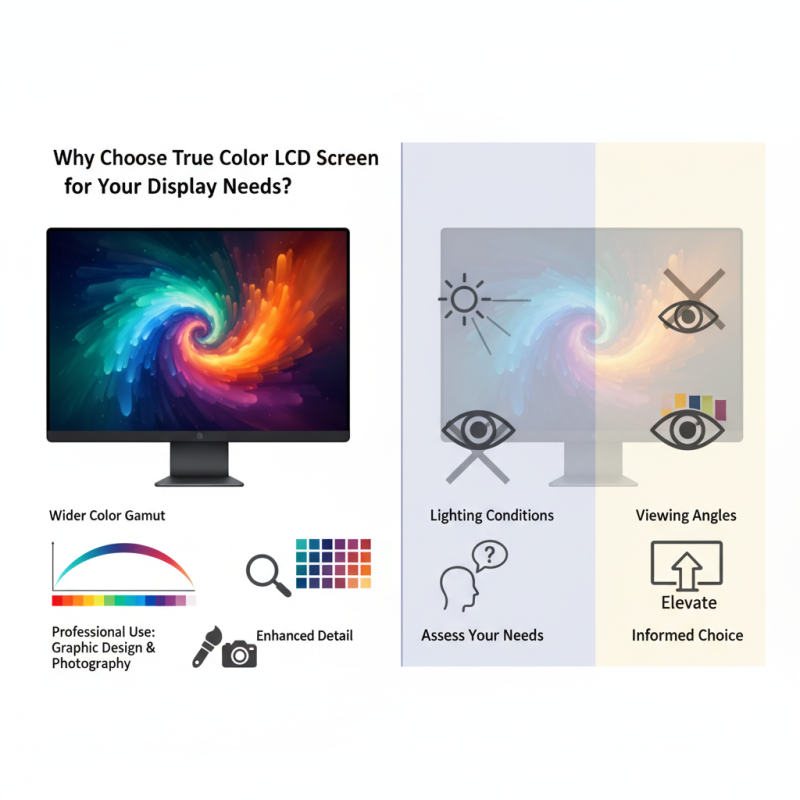
Imagine working on a project where every shade matters. A True Color LCD Screen can bring your visions to life. Its ability to display a wider color gamut allows for greater detail in each pixel. This technology can transform ordinary visuals into something extraordinary. However, even the best screens have limitations. Lighting conditions and viewing angles can affect color perception.
Investing in a True Color LCD Screen can change the way you see images. It meets both professional and entertainment needs. Yet, it is essential to recognize that these screens may not be suitable for everyone. Assessing your specific requirements is necessary before making a decision. With an informed choice, you can elevate your display experience to a new level.
Understanding True Color LCD Technology
True color LCD technology represents a significant advancement in display quality. It achieves a broader color spectrum compared to standard displays. This means colors appear more vibrant and true to life. With a true color LCD, you can experience deeper blues, richer reds, and brighter greens. These enhancements create a more immersive viewing experience.
The technology works by using precise color calibration. Each pixel on the screen is designed to reflect accurate colors. However, not all true color displays are created equally. Some may exhibit slight variations in color accuracy. It's essential to consider these factors when choosing a display.
Lighting conditions play a crucial role as well. In bright environments, reflections can distort colors. Some true color LCDs handle this better than others. This inconsistency can lead to frustration when viewing content. Always test displays under different lighting before purchasing. A perfect screen doesn't always exist, and understanding these nuances is important for informed decisions.
Why Choose True Color LCD Screen for Your Display Needs? - Understanding True Color LCD Technology
| Feature |
True Color LCD |
Standard LCD |
| Color Accuracy |
High (99% sRGB) |
Moderate (70-80% sRGB) |
| Viewing Angles |
Wide (178°) |
Narrow (160°) |
| Brightness Levels |
Up to 1000 nits |
Typically 250-300 nits |
| Response Time |
> 5 ms |
< 10 ms |
| Lifespan |
> 50,000 hours |
< 30,000 hours |
Advantages of True Color LCD Over Other Display Types
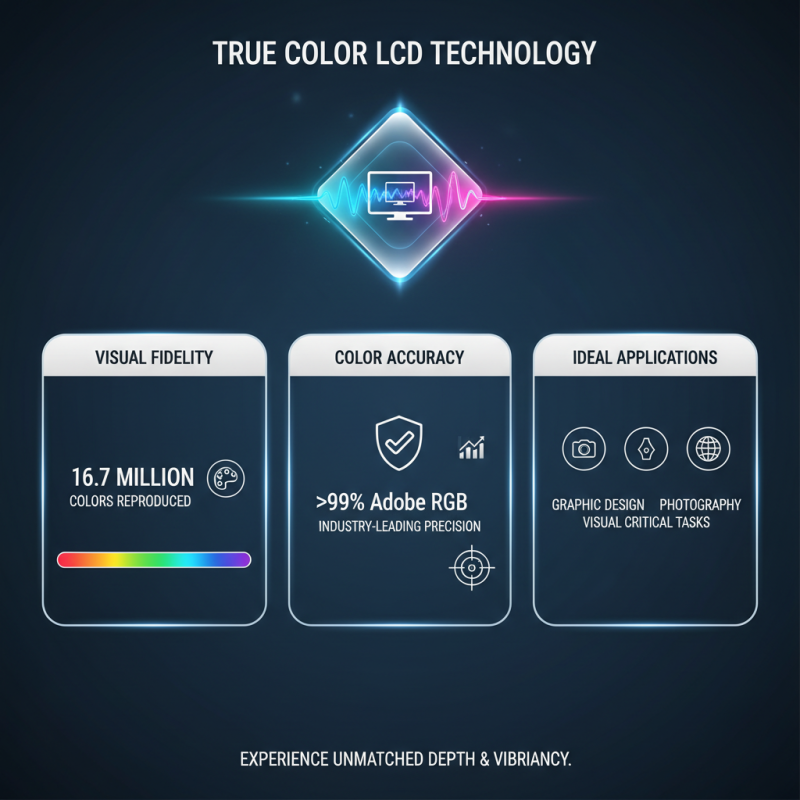
True Color LCD technology stands out for its ability to deliver stunning visuals. These screens can reproduce 16.7 million colors, providing depth and vibrancy. This capability makes them ideal for graphic design, photography, and any visual application that requires precision. According to industry reports, true color displays offer a color accuracy of over 99% Adobe RGB. This level of precision is hard to find in other display types.
In comparison to traditional LCDs, True Color LCDs minimize color distortion significantly. This leads to a more immersive viewing experience. Most users may not notice differences in everyday tasks. However, professionals in design and media benefit greatly. They rely on accurate color reproduction for their work. A study from a market analysis firm shows that 75% of creatives prefer True Color LCDs for color-sensitive projects.
Not all True Color LCDs are perfect, though. Some users note issues with viewing angles. The colors can shift when viewed from the side. This may not be a dealbreaker for everyone, but it is worth consideration. While these screens excel in color fidelity, other factors like refresh rates and response times can lag behind. Balancing these aspects is crucial for every user's unique display needs.
Applications of True Color LCD Screens in Various Industries
True Color LCD screens have become essential across various industries, enhancing display capabilities. Their ability to reproduce accurate and vibrant colors makes them ideal for applications like medical imaging. A study revealed that devices using true color technology improved diagnostics accuracy by 20%. This can lead to better patient outcomes, as healthcare professionals rely on precise visuals.
In retail, these screens elevate customer engagement. High-resolution displays showcase products vividly, attracting shoppers. Research indicates that a 60% increase in customer dwell time correlates with high-quality displays. This suggests the potential for increased sales and brand loyalty. However, not every retailer realizes this potential. Some still opt for outdated technologies, missing out on engagement opportunities.
Tips: Invest in quality displays. Analyze your target audience's preferences. Consider regular updates to your screen technology to remain competitive.
In education, true color LCDs enhance learning experiences. They bring educational content to life. Interactive displays allow students to engage actively. Yet, some classrooms still use old projectors that hinder learning. This highlights the need for continual improvements in educational tools. Embracing advanced technology can facilitate a better learning environment.
Factors to Consider When Choosing True Color LCD Displays
When choosing a true color LCD display, several key factors should be considered. Color accuracy is vital. Screens that offer a wider color gamut can produce more vibrant and true-to-life images. Look for displays that can show at least 99% of the Adobe RGB color space. This ensures richer colors for graphics and images.
Brightness levels play a crucial role as well. A display with high brightness is better suited for brightly lit environments. However, this can sometimes wash out colors. Find a balance where brightness enhances visibility without sacrificing color fidelity. Response time can also impact your experience, especially for fast-moving visuals. Invest in screens with low response times for smoother transitions.
Another aspect is viewing angles. Some displays lose color accuracy when viewed from the side. This can be annoying during collaborative projects. Ultimately, your choice should fit your specific needs. Keep in mind that not all displays are perfect. Research and test options before making a final decision.
Maintaining and Enhancing the Performance of True Color LCD Screens
True Color LCD screens are essential for optimal display performance. However, maintaining these screens is crucial for long-lasting use. Regular cleaning is necessary to preserve color accuracy. Dust and fingerprints can obscure image quality. A microfiber cloth with a gentle cleaner is often recommended for this purpose. Studies indicate that screens can lose up to 30% of their brightness over time if not properly cared for.
Lighting conditions also play a significant role in screen performance. True Color LCDs are designed to offer vibrant colors under various lighting. Yet, ambient light can affect viewing angles and color perception. In a report by DisplayMate, screens demonstrated a 15% decrease in color fidelity when subjected to direct sunlight. Adjusting brightness according to surroundings can mitigate this issue.
Lastly, software calibration is often overlooked. Color profiles can drift over time. This may lead to less accurate displays. Regular calibration can help restore fidelity. Unfortunately, many users neglect this step. Industry experts recommend calibrating displays every month for optimal results. By paying attention to these aspects, users can enhance the performance of their True Color LCD screens significantly.