How to Choose the Best Full Size LCD Display for Your Needs?
Selecting the right Full Size LCD Display can be challenging. With so many options, it's easy to feel overwhelmed. Understanding your specific needs is essential. Each display is unique in features, size, and technology. You should consider what you plan to use it for. Some people prioritize picture quality for gaming or design work. Others seek affordability and reliability for everyday tasks.
The market is flooded with various brands and models. This can create confusion when trying to identify the best fit. It’s crucial to research different types of Full Size LCD Displays. Look for reviews and expert opinions to guide your decision. This helps ensure that your choice aligns with both your requirements and budget.
Moreover, it’s important to reflect on what you value most in a display. Is it color accuracy, refresh rate, or connectivity options? Often, people overlook these details and regret their decision later. Taking the time to evaluate these factors will lead to a more satisfying purchase. Investing in the right Full Size LCD Display enhances your visual experience significantly, making careful consideration vital.
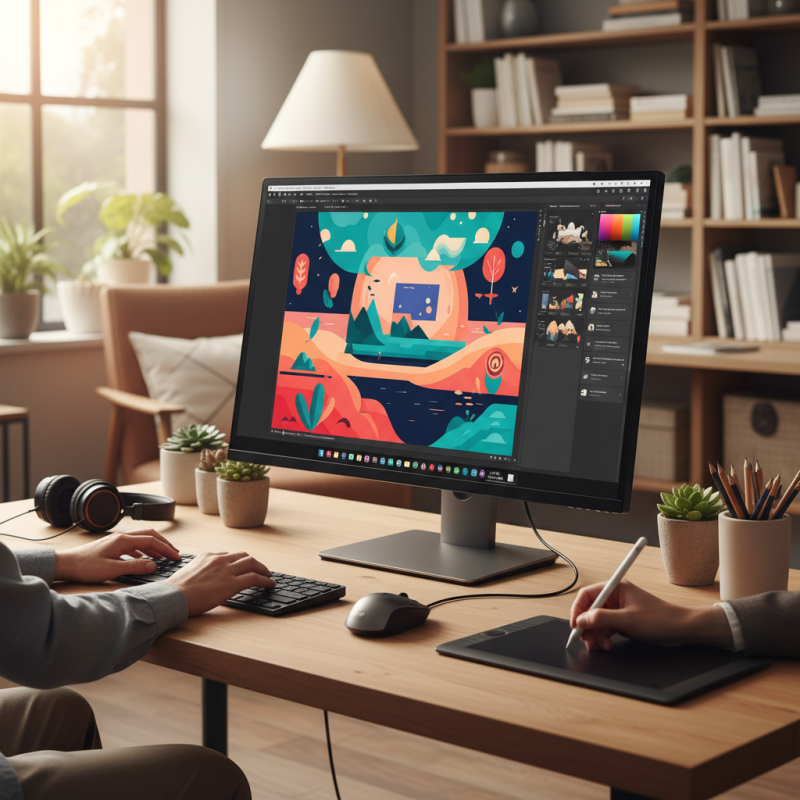
Understanding the Different Types of Full Size LCD Displays
When selecting a full-size LCD display, it's crucial to understand the different types available. The market offers various types, including IPS, VA, and TN panels. IPS panels are known for their excellent color accuracy and wide viewing angles, making them ideal for graphic design. VA panels typically offer better contrast ratios, which can enhance the movie-watching experience. TN panels are usually more affordable and have faster response times, making them popular for gaming.
Experts indicate that IPS displays dominate 40% of the global market share due to their superior performance. However, they may not be the best choice for every user. For instance, if you’re primarily gaming, a TN panel could offer the speed you need. Remember, your specific use case should guide your decision.
Tip: Before purchasing, test the displays in person. Look for color fidelity and viewing angles. Also, consider the screen size. A larger display may enhance productivity but can also consume more desk space. Evaluate your workspace before making a decision. Small adjustments can significantly improve your experience.
Key Specifications to Consider When Selecting an LCD Display
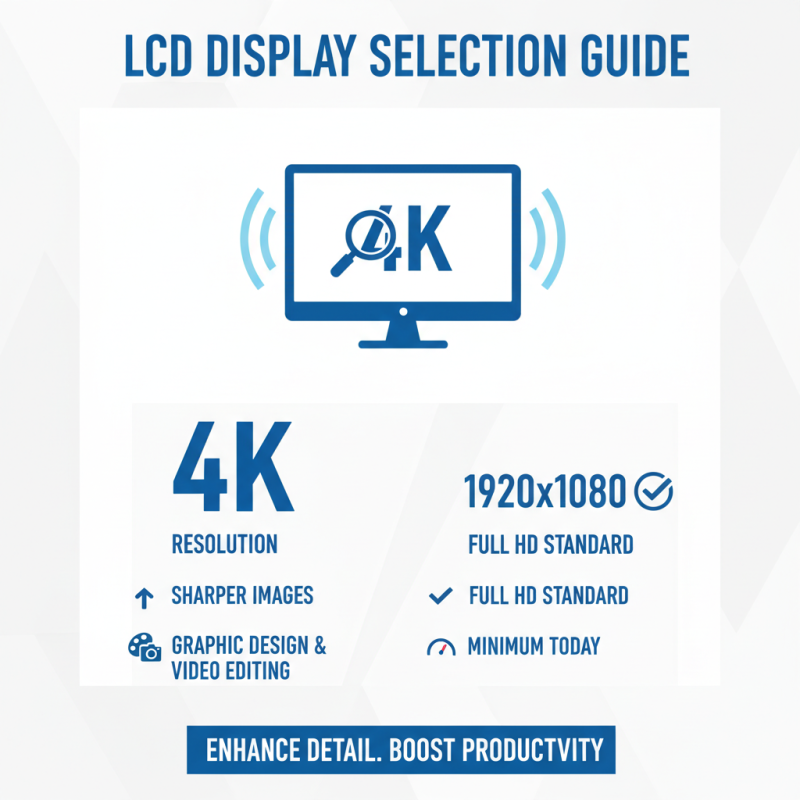
When selecting a full-size LCD display, understanding key specifications is essential. One critical factor is resolution. Higher resolutions, like 4K, provide sharper images. According to market research, displays with at least 1920x1080 pixels are now standard. This resolution enhances details, making it suitable for graphic design or video editing.
Color accuracy is another vital consideration. Metrics such as sRGB and Adobe RGB coverage should be evaluated. Data shows that displays covering 99% of sRGB produce more vibrant colors. This can impact professional tasks where precise color reproduction is necessary. Additionally, brightness levels, measured in nits, also play a role. A display with 300 nits or higher is often recommended for adequate visibility in various lighting conditions.
Viewing angle matters as well. Many users overlook this aspect. A display with at least 178-degree viewing angles offers consistent color and image quality from different perspectives. Lastly, refresh rates can influence the smoothness of visuals. Displays with 120Hz or more are ideal for gaming. However, even a 60Hz display may suffice for general use. Choosing the right specifications requires careful consideration of your specific needs and usage scenarios.
Comparing Resolution Options: HD, Full HD, 4K, and Beyond
Choosing the right resolution for a full-size LCD display can significantly impact your experience. HD offers basic visuals with 720p quality, suitable for casual viewing. However, if you plan to watch high-definition content, Full HD at 1080p provides sharper details and vibrant colors. The difference becomes evident when watching movies or playing video games.
For professionals in graphic design or video editing, 4K resolution is a game changer. This ultra-high-definition option provides four times the pixel count of Full HD. Images appear incredibly detailed and lifelike. Yet, 4K displays may require powerful hardware to perform at their best. Not everyone needs such high resolution, so consider your specific usage.
Beyond 4K, newer technologies like 8K offer even more detail. However, content availability is limited, and 8K displays can be costly. Reflect on how you use displays daily. The best choice isn’t just about numbers. Consider viewing distance, the types of content you consume, and your budget. Each situation is unique.
Assessing Display Performance Factors: Brightness, Contrast, and Response Time
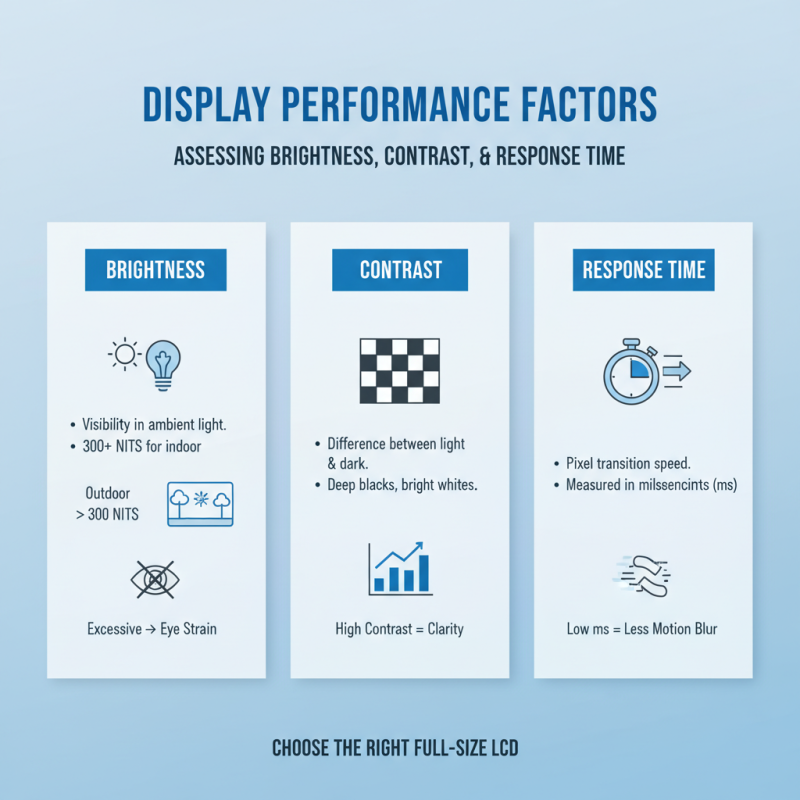
Choosing the right full-size LCD display hinges on several crucial performance factors. Brightness is a key element. Displays with higher brightness levels provide better visibility in well-lit environments. A screen with around 300 nits is often sufficient for indoor use. However, outdoor settings may demand brighter screens. Conversely, excessive brightness can lead to eye strain. It’s worth considering how prolonged use might affect comfort.
Contrast is another essential factor. A higher contrast ratio enhances image depth and detail. For multimedia tasks, a ratio of 1000:1 is commonly sought after. Yet, some displays may claim high ratios but fail to deliver in real-world applications. Testing the display in person can help validate its performance.
Response time, measured in milliseconds, impacts motion clarity. A lower response time minimizes blurring during fast-paced scenes. Aim for under 5 milliseconds for optimal performance. However, faster screens may introduce artifacts or color distortions. Balancing speed with overall image quality is vital. Engaging with community reviews and expert assessments can shed light on these fine points.
Identifying the Best Brands and Models Based on Industry Reviews
When selecting a full-size LCD display, understanding the industry landscape is vital. Various sources and reviews provide insights into the best models. Users often cite refresh rates, color accuracy, and size as critical factors. A display might have rich colors, yet it may fall short in brightness. This brings about a dilemma: should you prioritize vivid imagery or optimal viewing conditions?
Experts recommend looking at displays with high user satisfaction. Reading industry reviews can reveal patterns in performance. For instance, some displays excel in gaming due to their fast response times. Others may shine in graphic design, but they might not be suitable for everyday use. This inconsistency can lead to buyer’s remorse if expectations aren't clear.
Personal experiences also shape brand perceptions, further complicating choices. One person’s ideal screen may not resonate with another’s needs. Evaluating individual requirements against industry feedback is essential. Find out what matters most to you. There is no one-size-fits-all solution. Each choice comes with trade-offs, leading you to reassess your priorities constantly.
Comparison of Full Size LCD Display Features