Why Choose an LCD Module for Your Next Project?
When considering display technology for your next project, an LCD Module stands out as a reliable choice. LCD Modules provide clarity, efficiency, and versatility. They are widely used in various applications, from consumer electronics to industrial equipment. Their ability to deliver sharp images makes them a favorite among designers.
One key advantage of using an LCD Module is its energy efficiency. Compared to other display technologies, LCDs consume less power. This can be crucial for projects with strict energy constraints. However, some may argue that OLED displays outshine LCDs in terms of contrast and color vibrancy. Moreover, LCDs can struggle in direct sunlight. These are valid concerns worth evaluating.
Ultimately, the choice of an LCD Module depends on specific project needs. Despite some limitations, LCDs offer a balance of performance and cost-effectiveness. Their established technology and availability ensure that you can find the right solution for your display requirements.

The Basics of LCD Technology and Its Advantages
LCD technology has become a cornerstone in modern display systems. This technology utilizes liquid crystals to manipulate light, creating vibrant images. LCD modules are popular due to their slim profile and energy efficiency. They work by blocking or allowing light through liquid crystal cells. This structure results in sharp, clear visuals, making it an excellent choice for various applications.
One significant advantage of LCD modules is their versatility. They can be used in everything from handheld devices to large-scale industrial displays. Their ability to maintain color accuracy and brightness in various environments is essential. However, one may notice limitations in viewing angles. This can affect the visibility of the display from certain positions. Assessing these challenges is crucial in ensuring the intended audience can effectively view the content.
Cost-effectiveness is another factor. LCD modules often provide a balance between price and performance. But, while they are generally affordable, high-end models can be pricier. Finding the right module that fits your budget and project needs requires careful consideration. Every project presents unique requirements, and sometimes compromises are necessary. Reflecting on these factors can lead you towards making a more informed decision.
Key Factors to Consider When Choosing an LCD Module
Choosing an LCD module for your project involves various considerations. One critical factor is the display size. A larger screen can enhance readability and functionality, but it may also increase power consumption. Think about the space you have available. A compact module works well in tight spots.
Another important aspect is resolution. Higher resolution displays improve image clarity. However, this can lead to greater costs and complexity. Make sure the resolution suits your project needs. Ensure you balance between visual quality and your budget.
Don't overlook the interface. Different modules come with varying interface options. Make sure the selected module is compatible with your hardware. This compatibility can save time during development. Also, consider the environment where the module will operate. Temperature extremes or moisture can affect performance. Always choose a module rated for your specific conditions. Balancing all these factors can be tricky. It’s vital to evaluate how each element serves your project goals.
Common Applications of LCD Modules in Various Industries
LCD modules are increasingly popular across various industries due to their versatility and efficiency. In automotive applications, they display vital information such as speed and temperature. The clear visuals help drivers make quick decisions, enhancing safety on the road. In medical technology, LCDs are used in devices like patient monitors. These displays provide critical data in real-time, allowing healthcare providers to act swiftly.
In the consumer electronics sector, LCD screens shine in smartphones and tablets. These devices rely on LCDs for bright, sharp images. Users appreciate the vibrant colors and clarity when using their gadgets. Industrial settings benefit from LCD modules too. They are often utilized in control panels and machinery displays. These modules can withstand harsh environments, proving their reliability.
Tip: When selecting an LCD module, consider the operating conditions. Factors such as temperature and humidity can affect performance. Another key detail is viewing angles. Make sure the module meets your specific requirements for usability. Lastly, don’t overlook power consumption. Energy-efficient models can save costs long-term.
Comparing LCD Modules with Other Display Technologies
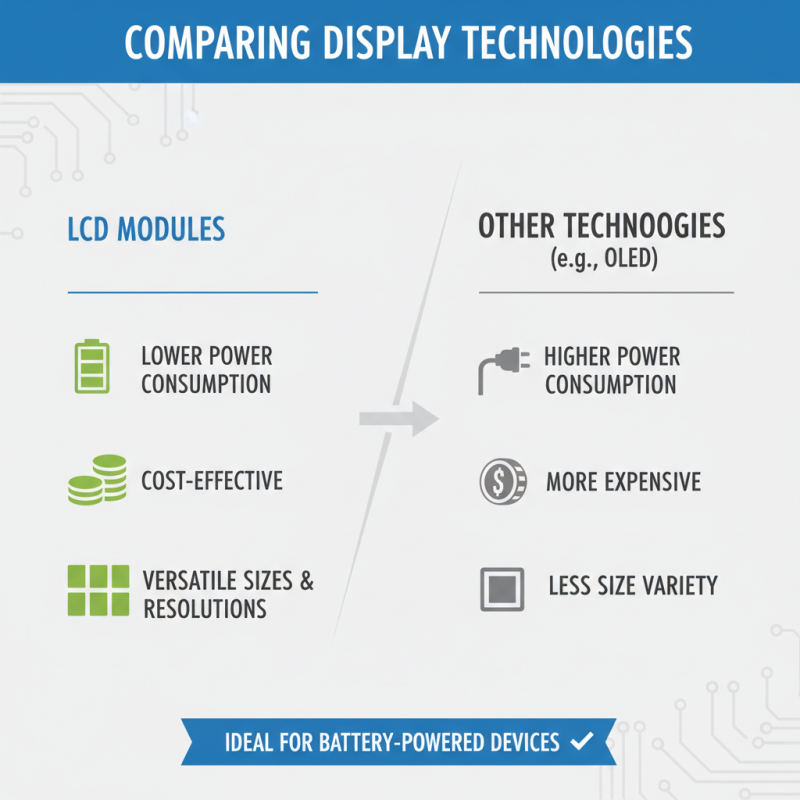
When considering display technologies, LCD modules present unique advantages over alternatives. LCDs are known for their balance between performance and cost. They consume less power than other technologies, such as OLEDs. This aspect makes them suitable for battery-operated devices. Additionally, their availability in various sizes and resolutions enhances versatility.
However, LCDs come with some drawbacks. Viewing angles can be limited compared to LED displays. Colors might not appear as vivid as in other technologies. Users need to evaluate if high color accuracy is necessary for their project. In environments with intense lighting, reflections may affect visibility, making it crucial to compare options effectively.
The decision to choose an LCD module should involve careful consideration of these factors. Weighing the benefits against the shortcomings can guide developers. Quality and reliability play significant roles in choice-making. Investigating specific project needs ensures the selected display will meet users' requirements.
Future Trends and Innovations in LCD Module Design
The landscape of LCD module design is witnessing significant transformation driven by technological advancements and user demands. Recent reports indicate that the global LCD market is projected to reach a valuation of over $85 billion by 2026, reflecting a robust compound annual growth rate (CAGR) of approximately 5.5%. Innovations in display technology are crucial as consumers increasingly seek high-quality visual experiences.
Key trends include the development of thinner, lighter modules with enhanced energy efficiency. For instance, the integration of LED backlighting is enabling brighter displays while consuming less power. These innovations cater to industries such as automotive and consumer electronics, where space and energy consumption are paramount. Moreover, advancements in touch-sensitive technologies are making LCD modules more interactive, driving their adoption in smart home devices.
However, challenges remain. The demand for higher resolution and flexible displays adds pressure on manufacturers. Production costs can rise as complexity increases. Additionally, sustainability concerns around materials and waste are ever-present. Companies must seek ways to balance performance enhancements with environmental responsibility. Addressing these challenges can reshape the future of LCD technology and its applications across various sectors.
Why Choose an LCD Module for Your Next Project? - Future Trends and Innovations in LCD Module Design
| Feature |
Details |
Future Trends |
| Power Consumption |
Low voltage operation and energy-efficient design. |
Integration of advanced power management features. |
| Display Quality |
High resolution, improved contrast, and brightness. |
Introduction of OLED and mini-LED enhancements. |
| Size and Form Factor |
Compact and lightweight designs for versatility. |
Flexible and curved display technologies. |
| Interface Compatibility |
Supports multiple interfaces like I2C and SPI. |
Emerging standards for seamless integration with IoT devices. |
| Durability |
Rugged designs for various environmental conditions. |
Advancements in materials for enhanced longevity. |
| Cost-Effectiveness |
Affordable options for bulk projects. |
Reduction in manufacturing costs through automation. |