Best Portable Monitor for Work and Travel in 2026?
In today's fast-paced work environment, the demand for portability is growing. According to a recent report by IDC, the portable monitor market is expected to increase by 30% annually. This growth is driven by remote work trends and the need for flexibility. Professionals are seeking lightweight, compact solutions that enhance productivity on the go.
Portable monitors provide a valuable solution for multitaskers. They enable users to extend their screen real estate, making tasks easier. However, not all portable monitors are created equal. Factors like resolution, weight, and battery life significantly impact user experience. A carefully selected portable monitor can enhance workflow, but the wrong choice can lead to frustration.
As we explore the best portable monitors for work and travel in 2026, it’s essential to consider not only features but also user reviews. Many users have reported issues with brightness and color accuracy. This highlights the importance of thorough research before making a purchase. A portable monitor should not only fit your bag but also meet your specific work requirements.
Overview of Portable Monitors for Work and Travel
When considering portable monitors for work and travel, performance is key. Look for lightweight options that fit easily into your bag. A screen size between 15 to 17 inches offers a good balance between portability and usability. Enhanced resolution is important for clarity, especially if you work with graphics or detailed documents.
Battery life matters. A portable monitor should last long enough for full work sessions without needing a charge. Investing in a model with decent battery longevity can save you from interruptions during meetings or long flights. Also, prioritize monitors with multiple connectivity options. USB-C and HDMI ports provide flexibility when connecting to different devices.
Tips: Choose models with built-in speakers to reduce the need for extra equipment. This compact approach simplifies your travel setup. Don’t overlook the importance of ergonomics. Consider adjustable stands or protective cases that add comfort and safeguard your monitor.
Testing a portable monitor before purchase is wise. This can help you gauge its weight, screen brightness, and usability. Each person’s preferences vary, so what works for one may not suit another. Take time to reflect on your specific needs, whether it’s for video conferencing or creative tasks.
Key Features to Consider for Portable Monitors
When selecting a portable monitor for work and travel, several key features stand out. The display size is crucial. A screen between 13 to 15 inches strikes a good balance. It’s sizable enough to be functional, yet compact for travel. Additionally, resolution matters greatly. Look for at least Full HD to ensure crisp and clear visuals, especially when working on detailed projects.
Another important aspect is connectivity. Consider monitors that offer versatile options like USB-C and HDMI. These ports can make life easier when connecting to various devices. An essential feature to note is weight. A lightweight monitor is ideal for mobile professionals. Ideally, it should weigh around 2 to 3 pounds.
Battery life is vital as well. A monitor with extended battery life enhances portability. Yet, many models struggle in this area. Finding one that lasts a full workday can be challenging. Finally, think about ergonomic design. A portable monitor should allow for adjustable viewing angles. This ensures comfort during lengthy work sessions. Balancing these features can be tricky. Nonetheless, making informed choices leads to better productivity on the go.
Best Portable Monitor Features Comparison for Work and Travel in 2026
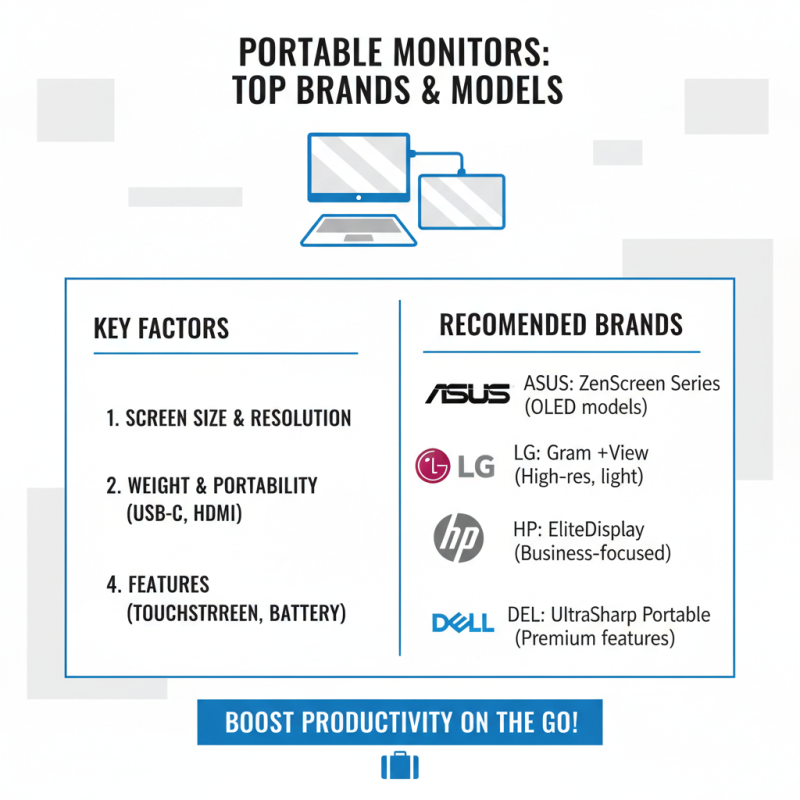
Top Brands and Models in the Portable Monitor Market
The portable monitor market continues to grow, driven by professionals who require flexibility. Users need lightweight options that can enhance productivity on the go. Various brands offer impressive features, making it challenging to choose the best model. Consider screen size and resolution when selecting a monitor for work or travel.
Some monitors boast full HD displays, ideal for presentations or design work. Battery life is also crucial; a short lifespan can limit usability. Connectivity options like USB-C or HDMI are essential for compatibility with most devices. Look for models that include adjustable stands for convenience.
Yet, not every monitor meets expectations. Some have durability issues that arise from frequent travel. User reviews often highlight temperature sensitivity. This feedback helps potential buyers make informed decisions. Choosing the right portable monitor requires careful consideration of various factors. It's a balance between portability, performance, and user needs.
Comparison of Display Quality and Portability
When choosing a portable monitor, display quality is crucial. Resolution plays a significant role in visual clarity. A high-resolution screen enhances productivity, especially when multitasking. Sharp images and vibrant colors contribute to a better working experience. It's essential to check the specs before purchasing. Color accuracy and brightness levels also matter. A monitor that struggles with these factors won't meet your needs.
Portability is another key concern. Weight and size significantly affect how easy it is to travel with a monitor. A sleek, lightweight monitor is ideal for work on the go. Finding a balance between screen size and portability can be challenging. Some models might offer excellent display quality but are bulky. Others are easy to carry but compromise on screen resolution.
Examining user feedback is essential for discovering real-world performance. Users often share insights on durability and usability. Look for comments about the ease of setup and connectivity options. These details can provide a more accurate picture. It’s clear that both display quality and portability must align with your specific needs.
User Reviews and Recommendations for 2026 Portable Monitors
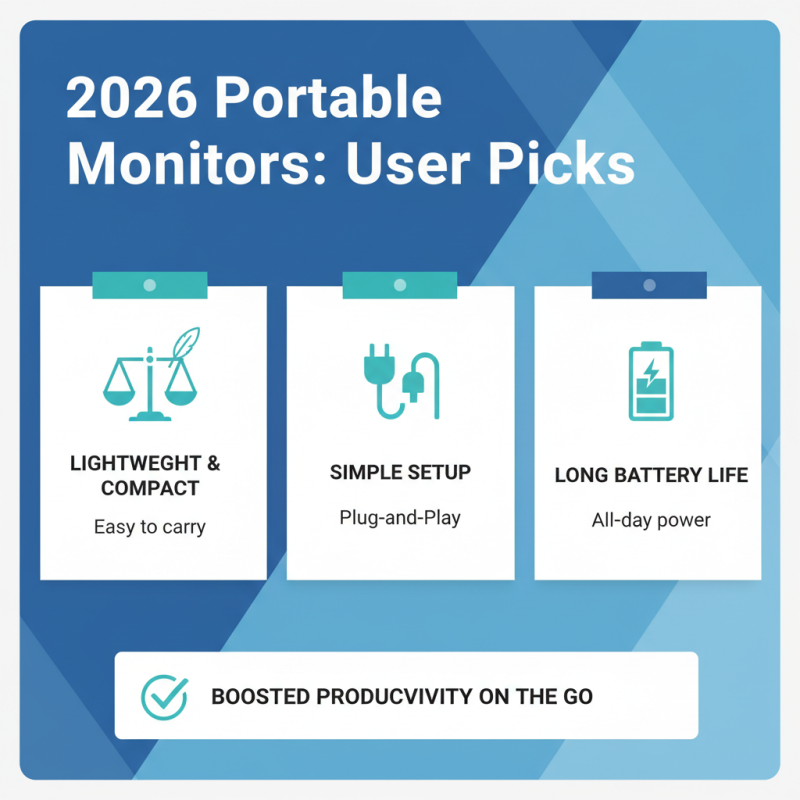
When considering the best portable monitors for 2026, user reviews play a crucial role. Many travelers emphasize weight and size. A lightweight design can easily fit into a laptop bag. Reviews often highlight how portability enhances productivity on the go. Users appreciate a smooth setup process and preferred plug-and-play options. Battery life is another key concern, as frequent charging can be a hassle.
People share mixed experiences regarding display quality. Some monitors have vibrant colors while others struggle in bright environments. Connectivity options are also important. Users want versatility with USB-C and HDMI ports. A common complaint is about the lack of built-in speakers, which can affect the overall experience. Many wish for a better balance between portability and functionality.
Finally, user feedback often reflects on durability. While some monitors withstand travel well, others show wear quickly. Recommendations vary based on individual needs. For instance, frequent flyers might prioritize compact designs. Meanwhile, digital nomads often seek out models with extended battery life. Engaging with varied opinions can guide consumers toward the best fit for their unique work and travel requirements.