The Best Full Color LCD Display Technologies for 2026
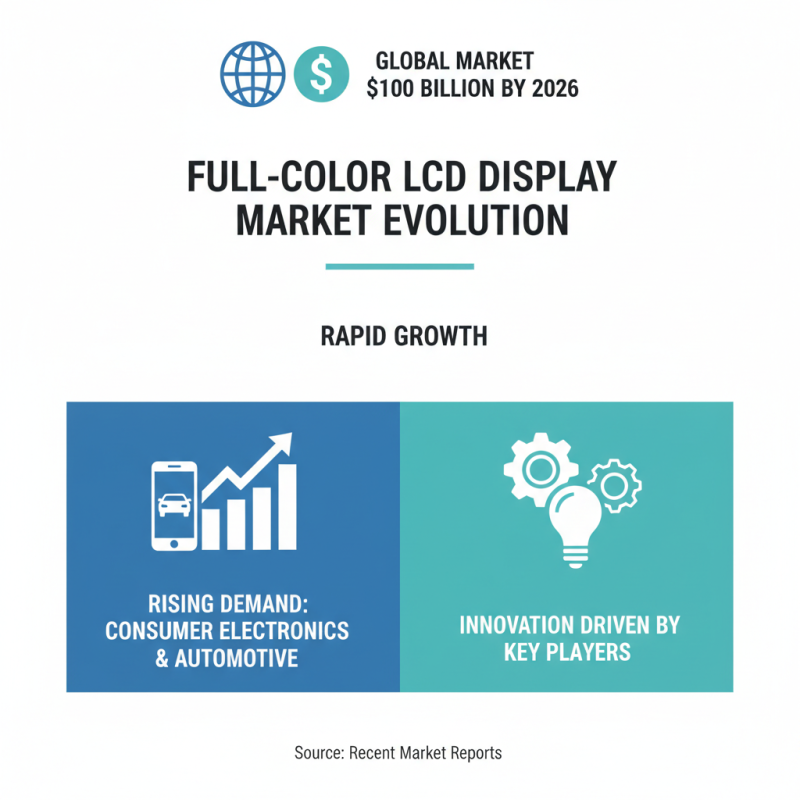
The demand for Full Color LCD Displays is on the rise. According to a recent report by Grand View Research, the global market for LCD technology is expected to reach $100 billion by 2026. This growth highlights the increasing reliance on display technologies in various sectors.
Key industries such as consumer electronics, automotive, and healthcare are driving this trend. Full Color LCD Displays offer vibrant images and energy efficiency, drawing attention from manufacturers. However, manufacturers face challenges in meeting the high expectations of consumers. Quality control in production can be inconsistent. Maintaining color accuracy and screen longevity remains a concern.
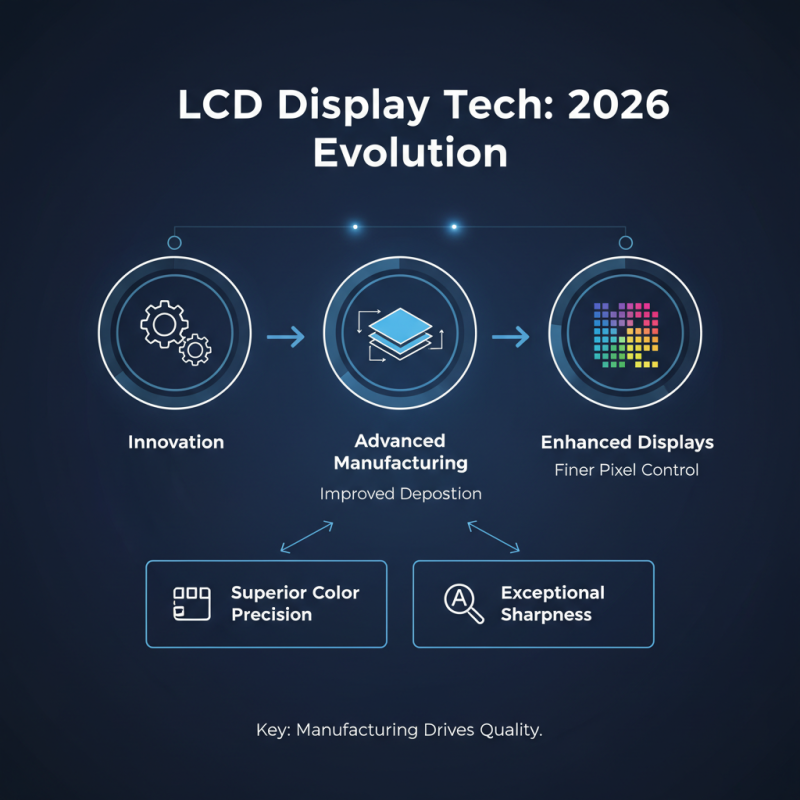
As we move into 2026, understanding the advancements in Full Color LCD Display technology is crucial. New innovations are emerging, yet not all are favorable. Some technologies may lead to higher production costs or sustainability issues. Exploring these developments will help inform industry decisions and consumer choices.

Emerging Trends in Full Color LCD Display Technologies for 2026
Emerging trends in full-color LCD display technologies for 2026 reveal exciting advancements. The market is expected to grow significantly, with a projected compound annual growth rate (CAGR) of 6.5%. This growth reflects increased demand for high-resolution displays in various sectors, including consumer electronics and automotive industries.
One notable trend is the adoption of mini-LED and micro-LED backlighting. These technologies enhance brightness and color accuracy. Reports suggest that these displays can improve energy efficiency by up to 30%. However, costs remain a concern. Integrating these advanced features could raise prices, impacting consumer accessibility.
There’s also a focus on sustainability. Researchers highlight the importance of developing eco-friendly materials. In 2026, energy-efficient designs might reduce carbon footprints. Yet, there is a gap in recycling technologies for LCD screens. Without effective waste management, environmental benefits may not be fully realized. Addressing these issues will be crucial for industry growth.
The Best Full Color LCD Display Technologies for 2026
This chart illustrates the projected market adoption rates of various full color LCD display technologies in 2026, highlighting trends such as Quantum Dot, OLED, Mini LED, and standard LCD technologies.
Comparative Analysis of Full Color LCD Technologies and Alternatives
In the world of display technologies, full color LCDs are facing intense competition. Recent reports highlight that full color LCDs capture about 35% of the display market. However, advancements in alternative technologies challenge this dominance. Organic Light Emitting Diodes (OLED) and MicroLED, for example, offer superior contrast and color accuracy. This shift is evident as OLED displays are projected to increase their market share by 18% by 2026.
The comparative analysis reveals interesting strengths and weaknesses. Full color LCDs are cost-effective and widely produced. Yet, they struggle with viewing angles and color reproduction compared to OLED. Users often find LCD backlighting unsatisfactory when viewing from sharp angles. Reports show that 60% of consumers prefer the vivid colors and deeper blacks of OLED displays.
Then there's the issue of sustainability. Full color LCDs rely on larger materials and higher energy consumption. In contrast, MicroLED shows promise with lower power usage and longer lifespans. But its production is still costly. This dichotomy raises questions about the future of LCD technology. Will it adapt and innovate, or will alternatives overwhelm the market? The coming years will be crucial for these developments.
The Best Full Color LCD Display Technologies for 2026 - Comparative Analysis
| Technology Type |
Color Reproduction |
Brightness (nits) |
Response Time (ms) |
Viewing Angles |
Market Adoption Rate |
| IPS (In-Plane Switching) |
Excellent |
300-500 |
4-8 |
178°/178° |
High |
| VA (Vertical Alignment) |
Good |
250-400 |
4-6 |
178°/178° |
Medium |
| TN (Twisted Nematic) |
Fair |
200-300 |
1-5 |
160°/165° |
Low |
| OLED (Organic LED) |
Outstanding |
400-1000 |
0.1-1 |
180°/180° |
Growing |
| Mini LED |
Excellent |
600-1200 |
2-4 |
160°/160° |
Emerging |
Future Applications and Impact of Full Color LCD Displays in Various Industries
As industries evolve, full-color LCD displays are set to transform various sectors by 2026. These displays offer vibrant images and improved clarity. In healthcare, doctors can use them for more accurate diagnosis. Patient monitoring systems will be more effective too.
In education, full-color LCDs can elevate learning experiences. Interactive displays can engage students in innovative ways. However, not all applications have been fully realized. Schools must invest wisely to ensure the technology meets their needs.
Tip: Consider your specific industry requirements before investing. Evaluate how color accuracy may impact your work.
In retail, vivid displays attract customers' attention. They can showcase products in rich detail. Yet, some businesses might only scratch the surface of this potential. They need to adapt and integrate displays more effectively.
Tip: Experiment with different layouts and content types to see what resonates. Being adaptable can lead to better engagement.