Leave Your Message

2026 Best Full Color LCD Display Options to Consider?

In today's tech-driven world, choosing the right display is crucial. The options for Full Color LCD Displays have grown significantly. Consumers face numerous choices in 2026. This article explores the best available displays while highlighting key features.

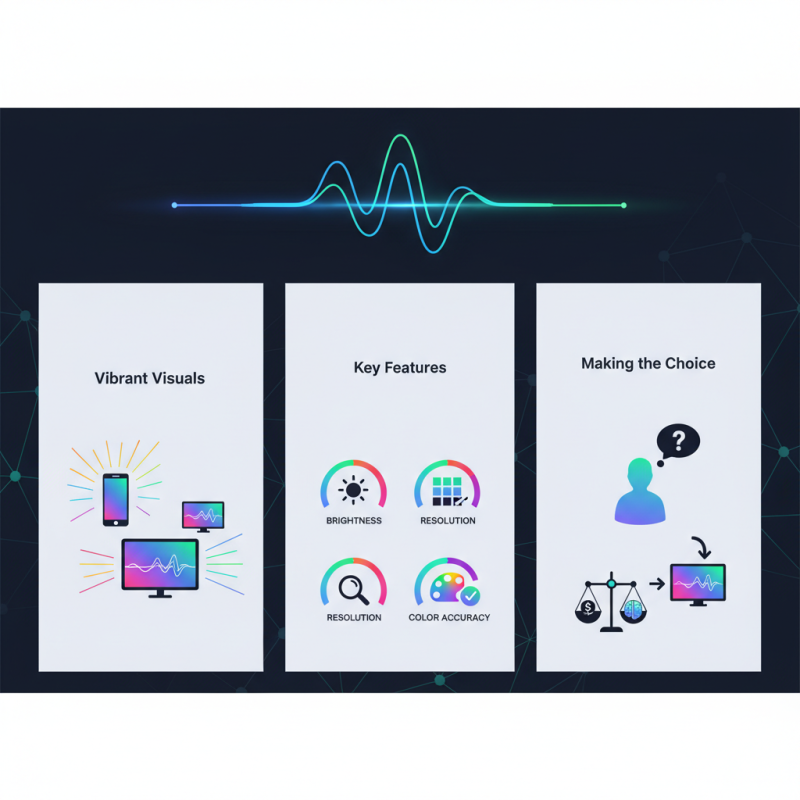
Full Color LCD Displays bring vibrant visuals to life. Whether in smartphones, televisions, or digital signage, color quality matters. A good display enhances user experience and boosts productivity. However, many users overlook specifications like brightness, resolution, and color accuracy.

Finding the best Full Color LCD Display isn't easy. It requires careful consideration of needs and environments. Users often settle for subpar options due to budget constraints or lack of knowledge. Exploring the latest technologies can lead to better decisions. As we dive deeper into the options available, we seek to balance aesthetics and practical use.
2026 Best Full Color LCD Display Options to Consider?

2026 Full Color LCD Display Overview: Key Features and Innovations

The 2026 landscape for full color LCD displays is evolving rapidly. More manufacturers are exploring enhanced brightness and color accuracy. The incorporation of advanced LED backlighting techniques is a notable trend. These innovations improve user experience with vivid colors and deeper contrasts, making displays visually stunning.

Another significant development is the integration of touchscreen capabilities in these LCDs. This allows for a more interactive experience. Users can engage directly, enhancing usability in various applications. However, the increasing sensitivity to touch may pose challenges in certain environments. Dust or unintended contact can lead to performance issues.

Sustainability is becoming a focal point as well. More displays are being designed with eco-friendly materials. However, production processes still need improvement. There is ongoing debate about balancing performance with environmental impacts. It's a complex conversation that needs attention as technology progresses.

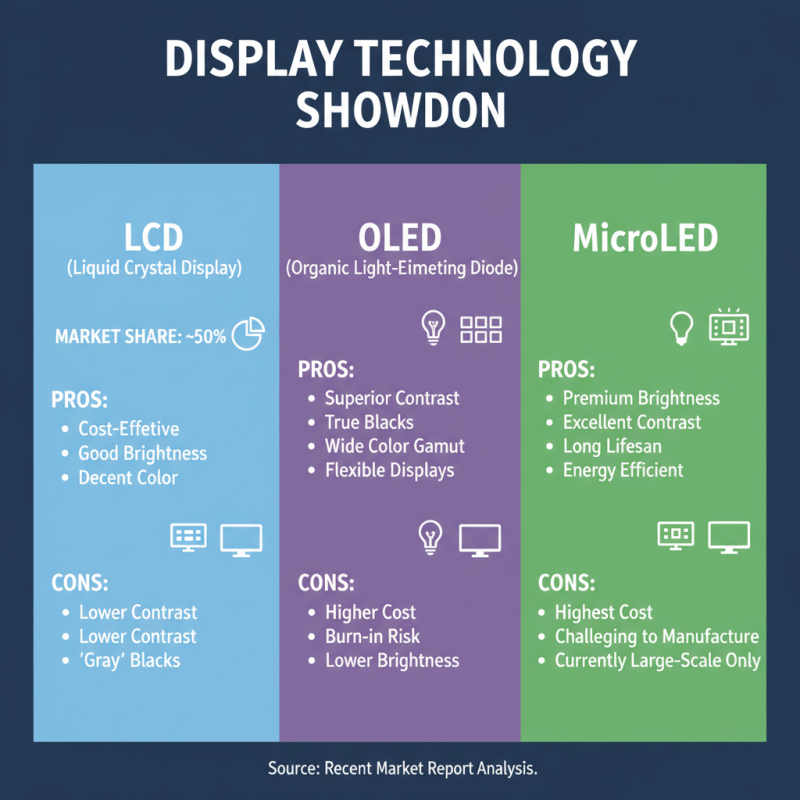
Comparison of Display Technologies: LCD vs. OLED vs. MicroLED

2026 Best Full Color LCD Display Options to Consider?

When choosing a display technology, it’s essential to understand the differences among LCD, OLED, and MicroLED. LCD, or Liquid Crystal Display, remains a popular choice due to its cost-effectiveness. According to a recent market report, LCD technology holds nearly 50% of the global display market share. Its backlighting offers decent brightness levels and decent color reproduction. Yet, it often falls short in contrast ratios, leading to less vibrant blacks compared to its counterparts.

OLED, with its organic compounds, emits light directly. This results in deeper blacks and better overall contrast. A study suggests that OLED panels can achieve a 1,000,000:1 contrast ratio, significantly outperforming LCDs. However, OLED displays face challenges like burn-in issues and are usually more expensive. On the other hand, MicroLED technology shows great promise. It combines the advantages of both LCD and OLED, offering high brightness and superior color accuracy. Yet, production costs remain high, making it less accessible for mainstream consumers.

In real-world applications, choosing the right display isn’t just about specs. Users have different needs based on environment and usage. For instance, an LCD may suffice for daily tasks. However, for immersive gaming or professional design work, OLED or MicroLED could be more appropriate. Consumers must weigh their options carefully, taking into account not just price, but also the longevity and performance of each technology in specific scenarios.

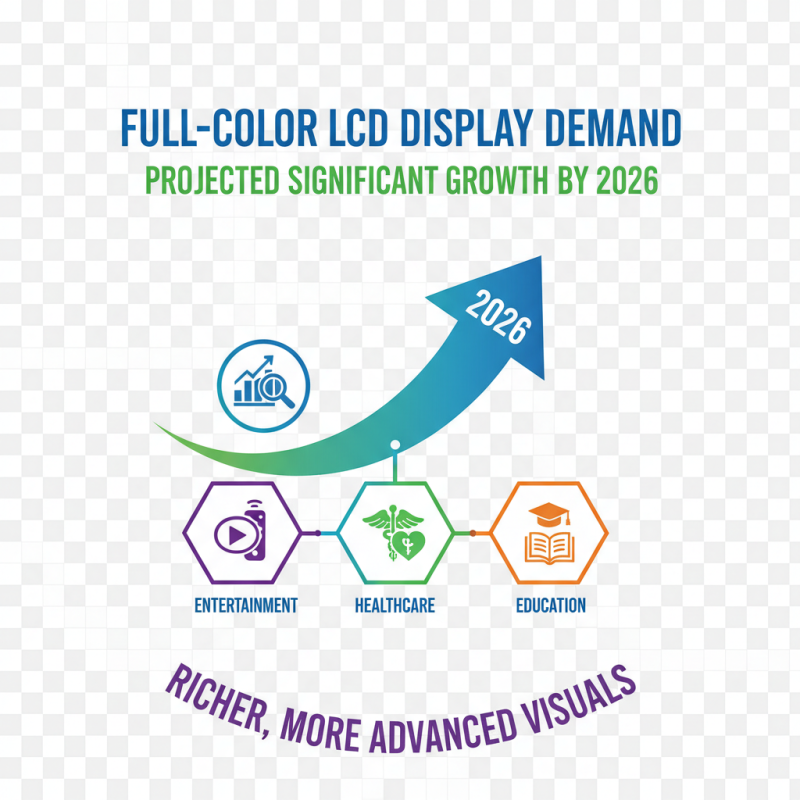
Market Trends: Projected Growth and Demand for Full Color LCDs in 2026

2026 Best Full Color LCD Display Options to Consider?

The demand for full color LCD displays is projected to grow significantly by 2026. This growth is driven by innovations in various sectors. Entertainment, healthcare, and education are some key areas seeing increased adoption. As technology advances, the visuals we expect become richer and more vibrant.

Investing in full color LCDs can be a wise choice. They offer improved resolution and better color accuracy. However, it’s essential to choose displays that suit specific needs. Research different options before making a decision. Don’t overlook size and energy efficiency.

Tip: Always consider the environment where the display will be used. Indoor and outdoor settings require different features. Additionally, keep budget constraints in mind. Sometimes, spending a little more ensures better long-term value. Growth in this market also means more options and sometimes confusing choices. Balance quality with affordability when selecting your display.

Top Brands Leading the Full Color LCD Display Market: A Statistical Insight

In the ever-evolving world of full color LCD displays, understanding the top brands can offer valuable insights. The market dynamics are shaped by innovative technologies and consumer preferences. Full color LCD displays are celebrated for their vibrant images and versatility. Several leading brands dominate with impressive market shares. They focus on research and development to stay ahead. This drives competition, leading to better options for consumers.

Despite the competitive landscape, some brands have shortcomings. Occasionally, their products struggle with color accuracy and refresh rates. Consumers may find inconsistencies in performance and quality. These challenges highlight the necessity for continuous improvement. Brands must listen to user feedback to refine their offerings. Flaws in the design process or manufacturing can affect overall satisfaction. The balance between technology and user experience is vital for success.

Market reports often reveal statistics that are intriguing yet perplexing. Some consumers prioritize price over quality, leading to varied purchasing decisions. However, many display choices remain unexplored, leaving users frustrated. The full color LCD display market requires more transparency. Awareness of the strengths and weaknesses of various brands can empower consumers. In this way, they can select displays that truly meet their needs.

Considerations for Choosing Full Color LCD Displays: Specs and Applications

When selecting full-color LCD displays, several factors come into play. The display's resolution is crucial. High-definition screens can reach resolutions of 1920x1080 pixels or higher. A 4K display provides exceptional clarity. This is vital for applications like medical imaging or design work. Users need to ask themselves how important resolution is for their specific needs.

Color accuracy is another essential consideration. Displays should cover a wide color gamut. A screen that covers 100% of sRGB is often necessary for graphic design. However, not all applications require this level of detail. Understanding the intended use of the display can help narrow down options. For example, signage may not need the same color fidelity as a photography editing tool.

Now, think about connectivity and compatibility. Many displays offer HDMI and DisplayPort options. Others may even support wireless connections. Ensure your chosen display fits into your current setup. Performance under varying lighting conditions matters as well. Some LCDs struggle in bright light, leading to glare. This can affect usability. Balancing these varying features is essential for finding the right display for your needs.