2026 Top Full Function LCD Display Buyers Guide?
As the demand for advanced technology grows, the market for Full Function LCD Displays continues to expand significantly. According to a recent report by MarketsandMarkets, the Full Function LCD Display market is projected to reach $15 billion by 2026, showcasing a CAGR of 8.5%. This growth reflects the increasing adoption of these displays in various sectors, including automotive, consumer electronics, and industrial applications.
Industry expert Dr. Emily Chan emphasizes the importance of reliability in this category. She stated, "Investing in a high-quality Full Function LCD Display ensures optimal performance and durability." Such insights underscore the critical role that these displays play in enhancing user experience and operational efficiency.
However, not all LCDs are created equal. Buyers must evaluate several factors, such as resolution, brightness, and energy efficiency, before making a choice. The variety in options sometimes leads to confusion. It's crucial to reflect on specific use cases to prevent poor purchasing decisions. By focusing on detailed specifications, users can find the best Full Function LCD Display for their unique needs.

Understanding Full Function LCD Displays: Key Features and Benefits
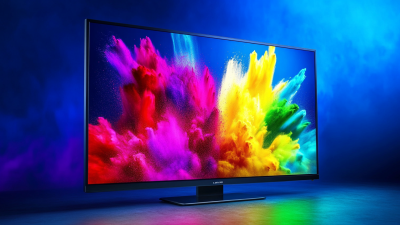
Full function LCD displays have become essential in various applications. These screens offer vivid colors and excellent clarity. Users enjoy the immersive experience they provide, from gaming to professional presentations. Many appreciate the energy efficiency that these displays bring. They consume less power compared to older technologies, helping to reduce electricity costs and environmental impact.
Key features of full function LCD displays include high resolution and refresh rates. High resolution enables sharp images, making details stand out. Fast refresh rates ensure smooth motion, reducing blur during action scenes or fast-moving visuals. Additionally, many displays offer adjustable brightness levels, which can enhance visibility in different lighting conditions. Despite these benefits, some may overlook the importance of proper calibration, which can significantly affect color accuracy.
Durability is another notable aspect. Full function LCD displays are generally robust, but misuse can lead to damage. Proper handling and maintenance are critical to prolong their lifespan. Users should regularly clean screens and avoid exposure to extreme temperatures. Understanding these features helps consumers make informed decisions when investing in LCD technology.
2026 Top Full Function LCD Display Buyers Guide
| Feature |
Description |
Benefits |
| Resolution |
Common resolutions include Full HD (1920x1080) and 4K (3840x2160). |
Higher resolutions provide clearer images and better detail. |
| Color Accuracy |
Measured in percentage of sRGB or AdobeRGB coverage. |
Improves the quality of graphics and colors displayed. |
| Response Time |
Typically ranges from 1ms to 5ms. |
Reduces motion blur for a smoother viewing experience. |
| Viewing Angles |
Commonly up to 178 degrees horizontally and vertically. |
Allows for better visibility from different angles. |
| Connectivity |
Includes HDMI, USB, DisplayPort, etc. |
Offers versatility for connecting various devices. |
Factors to Consider When Choosing the Right LCD Display for Your Needs
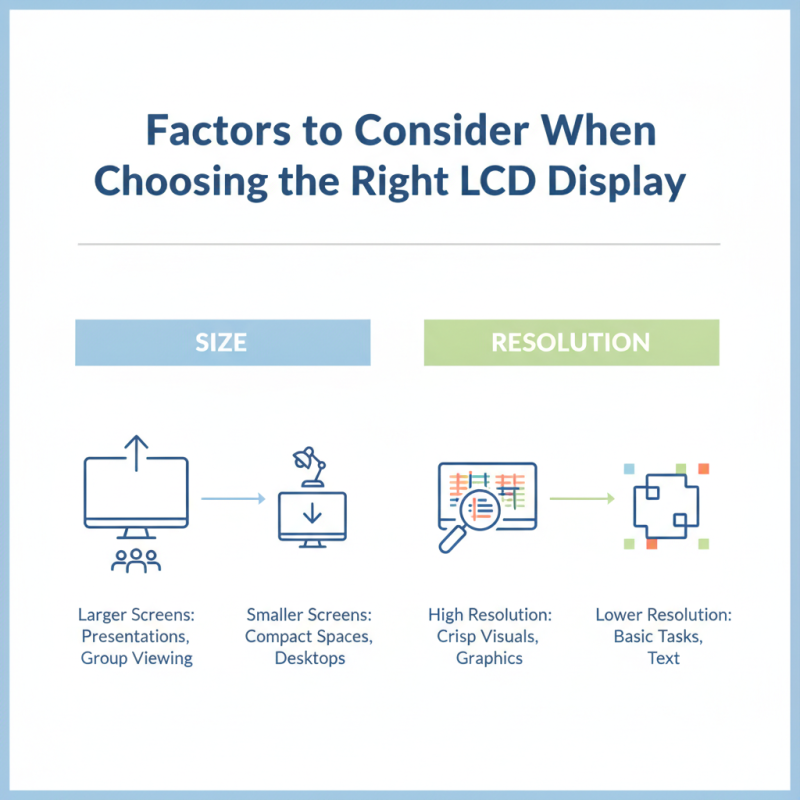
When selecting the right LCD display, several factors warrant careful consideration. Begin with size. The dimensions of the display greatly impact usability. A larger screen is ideal for presentations, while a smaller one suits compact spaces. Resolution is another critical aspect. High resolution ensures crisp visuals, especially for graphic-heavy applications, while lower resolutions may suffice for basic tasks.
Next, think about panel technology. Different types offer varying performance levels, including color accuracy and viewing angles. Be mindful of brightness and contrast ratios as well. A brighter screen stands out in well-lit environments, while adequate contrast enhances visibility in darker settings. Connectivity options are essential too; ensure compatibility with your devices.
Don't overlook energy efficiency. An efficient display saves power and reduces operating costs. Consider the lifespan of the LCD as well. Higher-quality models endure longer, often compensating for the initial investment. Think about how you will truly use the display. It's important to reflect on your specific needs to make an informed choice. A mismatch can lead to disappointment, so weigh these factors thoughtfully before making a decision.
Top Brands and Models in the Full Function LCD Display Market
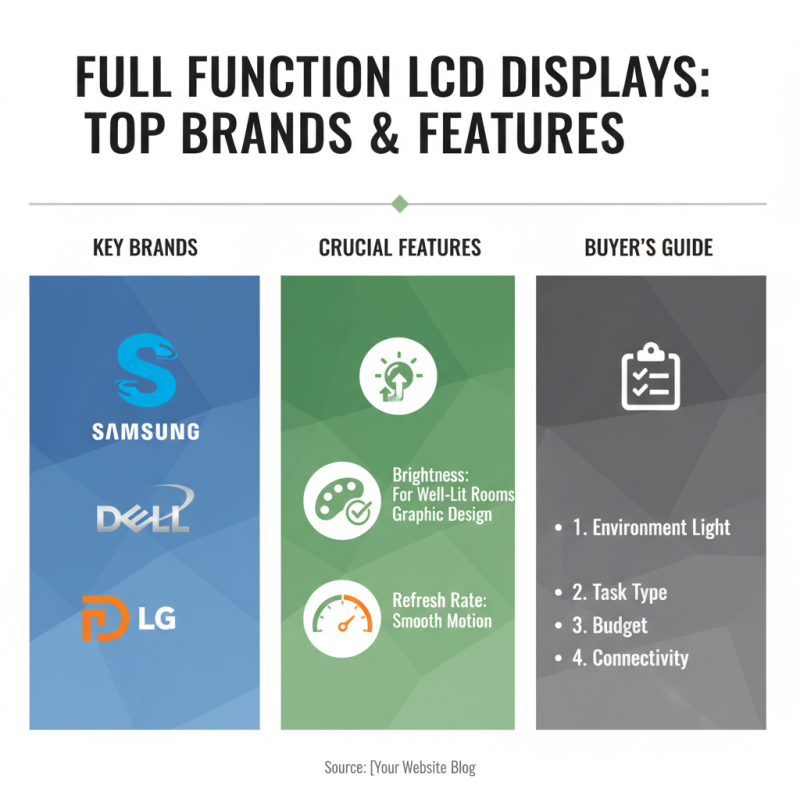
The full function LCD display market offers a variety of brands and models, each with unique features. Consumers must consider several factors when selecting a display that meets their needs. Brightness, color accuracy, and refresh rates are crucial. A display with high brightness helps in well-lit environments. Meanwhile, color accuracy is essential for tasks like graphic design.
Some models excel in providing user-friendly interfaces. These intuitive controls enhance the overall experience. Yet, not all displays achieve perfect color reproduction. Certain models can fall short, leading users to feel unsatisfied. Researching reviews and user experiences is beneficial for potential buyers.
When exploring top brands in this space, look for customer support and warranty options. Robust support can be a game-changer. In contrast, unreliable customer service may create frustration. Buyers should weigh their options carefully, and explore various models to find the right fit. This approach aids in making informed decisions.
Comparative Analysis of Pricing and Quality in LCD Displays
When evaluating LCD displays, pricing and quality are often at the forefront of buyer decisions. Recent industry data indicates that pricing variations can reach as much as 30% for similar features. This discrepancy is crucial for consumers who seek value without compromising quality. Typically, higher-priced models offer better color accuracy and longevity. For instance, detailed studies show that displays with HDR support provide richer imagery, yet they often come at a premium.
Quality assessment must consider not only the initial cost but long-term performance. According to a report by IHS Markit, displays with a low pixel defect rate often indicate superior manufacturing processes. Regular data suggest that 15% of budget displays exhibit significant defects within the first year. In contrast, mid-range models show a defect rate as low as 5%. Consumers need to balance upfront costs against the potential need for replacement or maintenance.
Furthermore, market trends suggest that consumers are increasingly willing to invest in quality displays. A survey revealed that 60% of buyers prioritize feature-rich displays over low prices. While price remains a key factor, the focus appears to shift toward performance and overall lifespan. Buyers should consider these aspects carefully when navigating the complex landscape of LCD displays.
Future Trends in LCD Display Technology and What to Expect in 2026
As we look towards 2026, the landscape of LCD display technology is set to evolve dramatically. One prominent trend is the shift towards enhanced energy efficiency. Manufacturers are investing in technologies that reduce power consumption, making displays more sustainable without sacrificing performance. This has the potential to transform how devices are used across various sectors, from consumer electronics to industrial applications.
Another key development on the horizon is the move towards higher resolution and improved color accuracy. Displays will feature more vibrant colors and sharper images, driven by advancements in panel technology. Expect resolutions beyond current standards, pushing the boundaries of visual experience. However, the rapid pace of innovation presents challenges, such as compatibility issues with existing content. These factors may require consumers and businesses to adapt, reflecting on their needs and objectives.
Moreover, the integration of smart capabilities into LCD displays is becoming increasingly important. With the rise of the Internet of Things (IoT), displays will connect seamlessly with other devices. This convergence could expose certain vulnerabilities, prompting manufacturers to rethink security measures. Balancing innovation with safety will be essential as we approach 2026.